The World’s Most Dangerous Job

A mountaineering tragedy strikes on a Good Friday, 18 April 2014. An avalanche occurred on the slope of Mt Everest killing more than 13 climbing Sherpas, and still counting. It is devastating for the climbing community all over the world. To make it sound worst, only Nepalis were killed in this unfortunate accident (or well, not that foreigners deserve to die, no one really should die this way).

You see, climbing sherpas are the back bone to the entire climbing business on Mt Everest, they did majority of the work. From ferrying loads to camps, fixing ropes on the routes, sherpas also build up the entire temporary home for all the climbers. When a disaster strike, it is inevitable to have at least one or more sherpas be involved.

I can’t help but to think, have I fulfilled my desire to climb Everest at the expense of risking the life of the climbing sherpas? I probably have. To make myself feel less guilty, and if you allow me to simply put it that when there is a demand (people who want to climb), there will be a supply (the sherpas enable it). Reading from the report by Esquire , the article quoted that sherpas climb for the money, with the purpose of making a better living for their families.

Sherpas call Mt. Everest “Chomolungma,” which translates into Holy Mother. But it’s not spirituality that motivates them to risk their lives for tourists.

“A lot of climbers have romantic notions about why the Sherpas do this work,” said anthropologist Sherry B. Ortner, author of the book, “Life and Death on Mt. Everest: Sherpas and Himalayan Mountaineering.”  “For the Sherpas it has always very clearly been about the money.  This is higher paying work than anything else they could do. A top Sherpa can earn about $6,000 in a two to three-month season, about 10 times the average annual income in Nepal. ”

I would not have been able to climb Everest without the support of the sherpas. That’s a fact that I cannot deny. And as long as there are aspiring climbers like me, there will be sherpas who would be wiling to risk their life to stay on Everest. The chinese word – 危机 –  means crisis, but if you read the word on its own, it means “危” refers to “Danger”, and “机” refers to “Opportunity”. Where there is a risk, there is an opportunity. And, death is part of the opportunity.

In sorrow, we mourn those lost. May the climbing sherpas who perished on Mt Everest Rest In Peace.

Get updates on the coverage by Alan Arnette

4 Simple Tips to stay away from AMS

AMS = Acute Mountain Sickness

It really sucks to suffer from AMS during a high altitude trek/climb. As much as we want to accept that it is inevitable to be affected by altitude as we ascend, we want to avoid it since it can be managed. While I have been able to keep “AMS” in control during my climbs all these years, I had suffered from altitude sickness in my earlier climbing days. I will still be susceptible to AMS if I am not careful. I experienced mild headache when I was on Mt Damavand’s high camp at about 4600m some 4 months ago. The often you climb high, the better your body can manage at altitude. But no one is really immune to oxygen deficiency environment.

Moving slowly and feeling breathless on an ascend is normal. It is because the thin air makes you feel lethargic and prevent you from performing your best even when you have sufficient physical training prior to the climb. Therefore, feeling breathless and a bit of headache are norms, and almost always happen. What is crucial is to prevent these usual symptoms from acting up that may lead to life-threatening altitude sickness such as the Pulmonary edema (fluid in the lungs), and Cerebral edema (swelling of the brain).

Here, I have 4 simple tips to help prevent altitude sickness:

Tip # 1 – Have sufficient sleep the week leading to your departure day

Because you are going on a 2-weeks leave, and you need to get your work done to hand over to your colleague(s). You feel bad that your colleagues have to cover your duties. So the last few days before you go on leave you spend most of your time working late into the night. You have little sleep. You think it is fine because you can catch up with your sleep on the plane. The strategy is TOTALLY WRONG! Sleep debt is hard to repay. It takes a long time to catch up with your lost sleep and before you know it you are already heading for the hills. Your chance of buying more sleep is slim. Lack of sleep is one of the reasons for having headache.

Tip # 2 – Drink enough water the week leading to your departure day

Staying hydrated during the trek/climb is important, even more so before you arrive at an elevation. Many people fail to take note of this aspect of a pre-climb preparation. We need to constantly feed our body with fluid to stay hydrated and healthy. Take extra care of your water intake. A person who perspires heavily will need to drink more than someone who doesn’t. Thirst isn’t the best indicator that you need to drink. If you get thirsty, you are already dehydrated. Well hydrated body don’t happen overnight.

Tip # 3 – Move like a Tortise when at an elevation

This tip is probably known by many already. But what is unknown is that a simple rush of time can cause a headache to act up. Examples – walking fast or running up/down the stairs in the guesthouses. Hopping from one rock to another during the trek. Getting up too fast from a squat. Treat yourself like an old fellow or like a tortise, avoid making drastic movement.

Tip # 4 – Drink 1 Litre of water every morning during the trek/climb

Dehydration can be a serious condition that can lead to problems ranging from swollen feet or a headache to life-threatening illnesses such as heat stroke.  The risk of dehydration is higher when in cold and high places. So staying hydrated during a trek/climb is vital. Every night before you sleep, fill up your water bottle (1 litre preferred) with hot water and keep it with you in your sleeping bag. Drink up your water when you wake up in the morning. As you have kept your water in your sleeping bag, your body temperature will help prevent the water from turning too cold which makes it easy to drink.

As I have mentioned earlier, no one can fully immune to altitude sickness. But we can take preventive measures to reduce the risk of getting AMS.  People who have anemia, and high/low blood pressure tend to suffer more at high elevation; consult your doctor before you travel.

Plan your schedule earlier so you don’t have to rush to go out to play. Try out the 4 simple tips, it will only make your next high adventure more enjoyable.

More Than A Mountain

After returning from climbing Mt Everest in 2009, my team and I were busy catching up with our personal lives. Jane, our team leader, went on to complete the Seven Summits quest and MBA programme; Esther got married and is now a mum of a 18 months old baby girl – Grace; Lihui also got married and gotten her motorbike license, Yihui took up another challenge by walking a 1000 miles across the Gobi-Desert, scaled Denali (one of the Seven Summits), Peh Gee has been busy with her career and have settled into her new home – a landed property. As for me, I had put my career dreams on hold, and now I am happy to own a travel business, climbed Ama Dablam which I long to do so way before my Everest dream.

Perhaps our busy schedule was the main reason why our book took 4 years to realise, almost as long as the time we took to prepare to climb Mt. Everest.

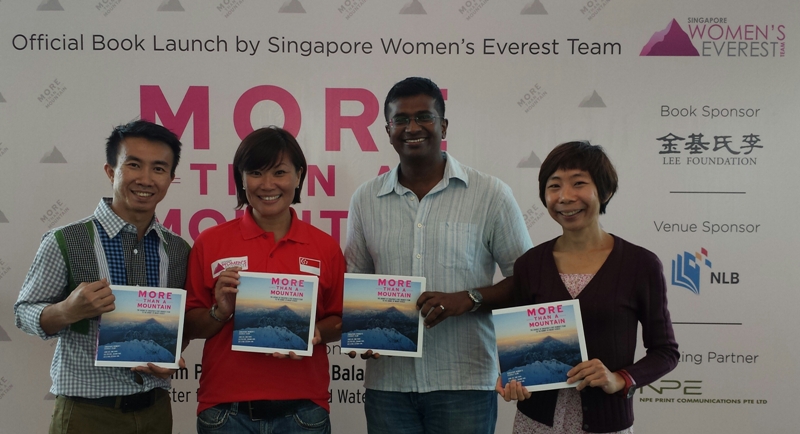
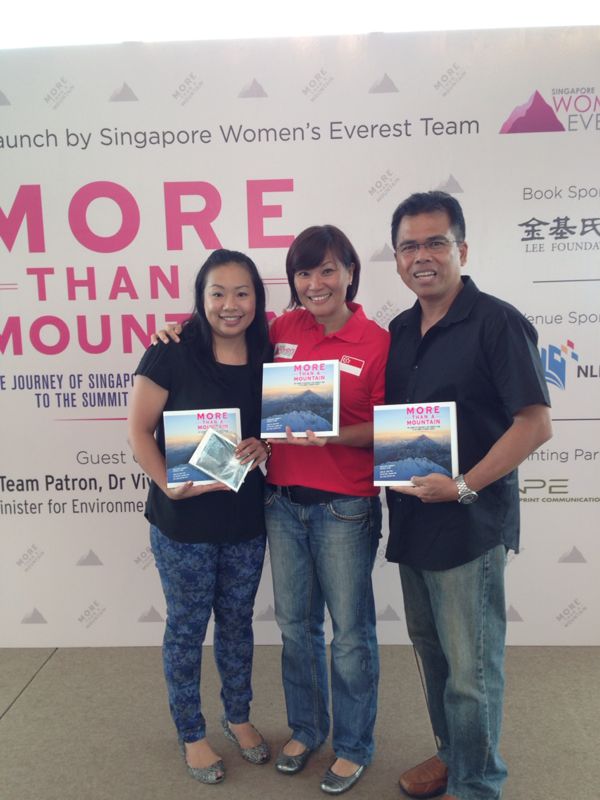
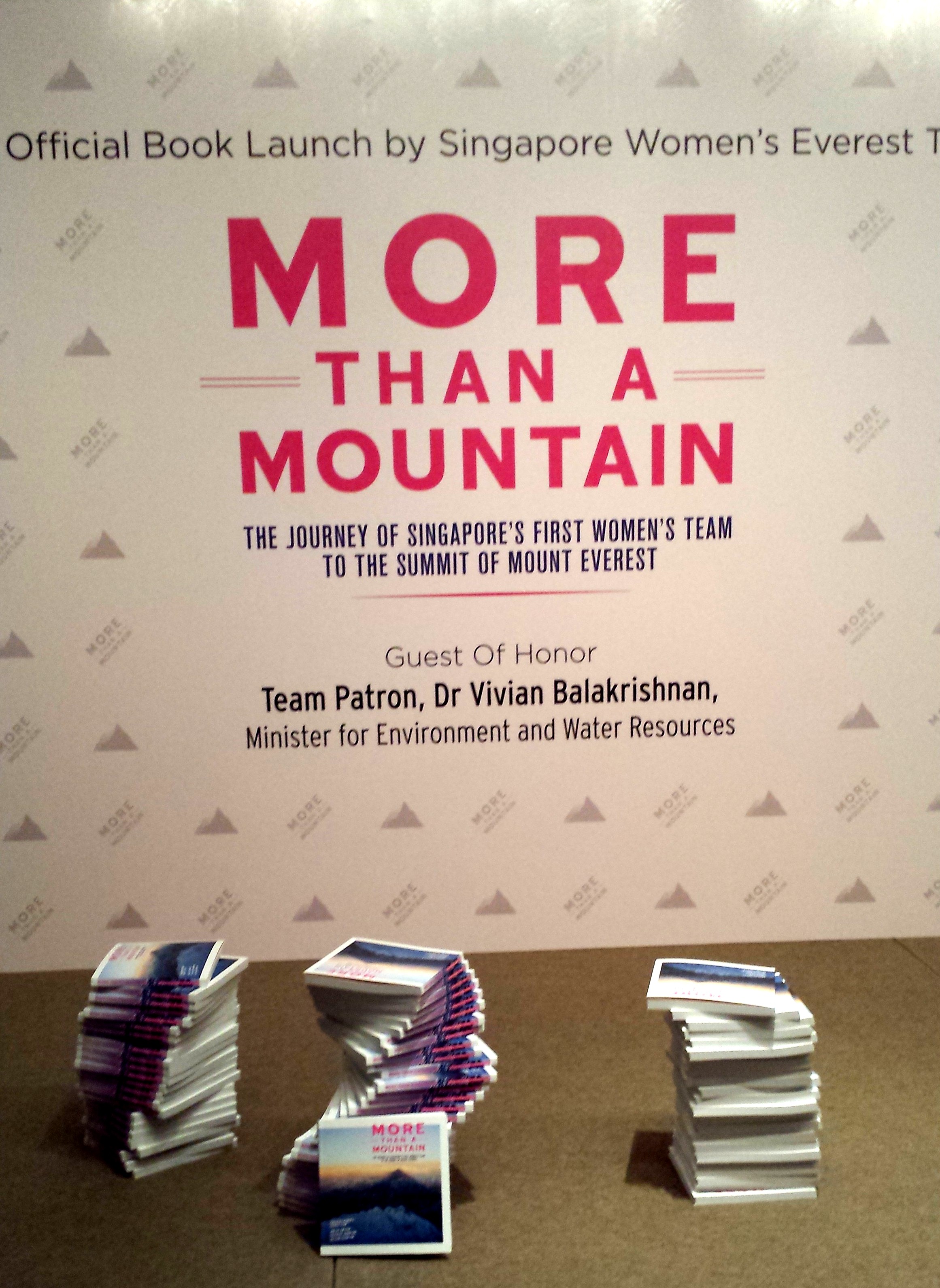
Titled as “More Than A Mountain”, it captures the stories of our 5-years Everest journey. We wrote true and bold stories about what went on before and during the climb. If you would like to grab a copy of our book, you can make purchases at our team website. Books bought in the month of November will be autographed by the team. Each book is priced at S$27.

The book was officially launched on Sun, 10 November 2013 at the POD, National Library Board. Our team patron, Dr Vivian Balakrisnan, Minister for the Environment and Water Resources, was the Guest of Honor.
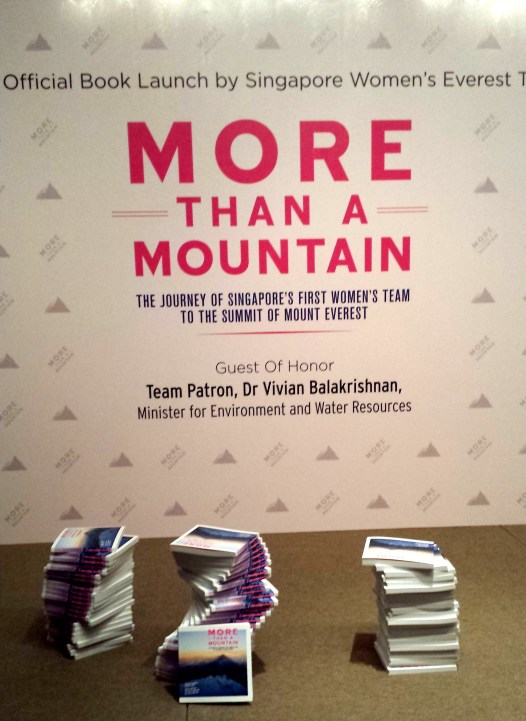
Eve of our book launch, the books were fresh from the "oven". (09 Nov 2013)

This was taken on the eve of our book launch, the books were fresh from the “oven”. (09 Nov 2013)

We were really amazed that we could feel the book in our hands.

We were really amazed that we could feel the book in our hands. (09 Nov 2013)

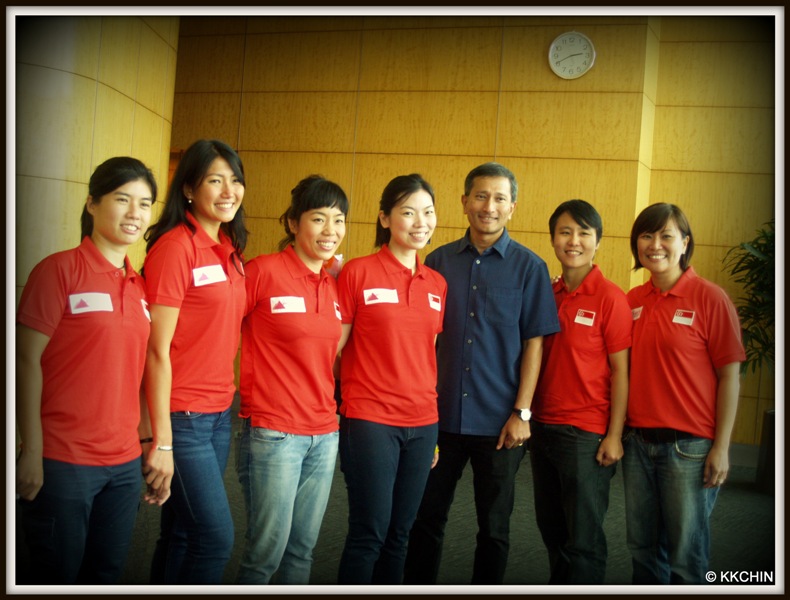
The team received Dr Vivian Balakrishnan at the POD

The team received Dr Vivian Balakrishnan at the POD, NLB  (10 Nov 2013)
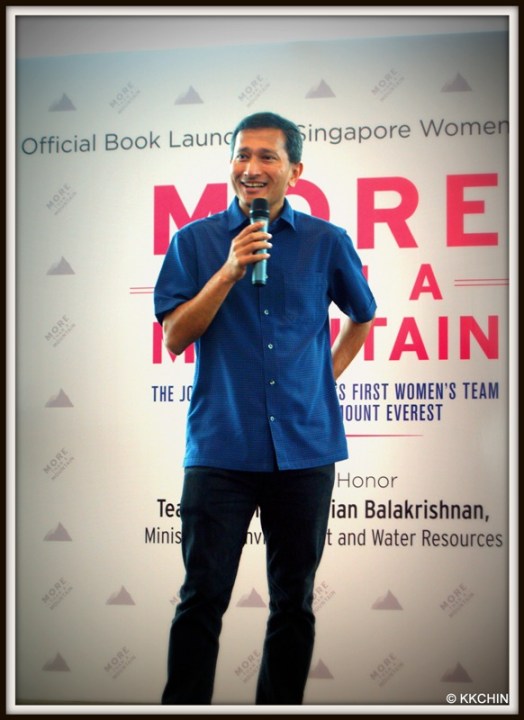
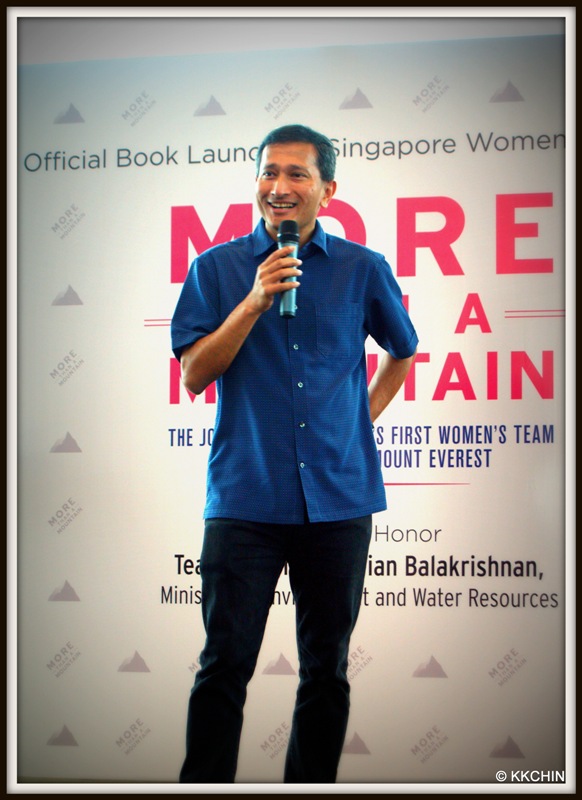
Our very charismatic patron, Dr Vivian Balakrishnan, gave a short speech to our guests. Dr Vivian has been with us since the team was formed in 2004. He was very supportive of us and gave us much encouragement when we met with sponsorship disappointment.

Our very charismatic patron, Dr Vivian Balakrishnan, gave a short speech to our guests. Dr Vivian has been with us since the team was formed in 2004. He was very supportive of us (I believe he still is) and gave us much encouragement when we met with sponsorship disappointment.
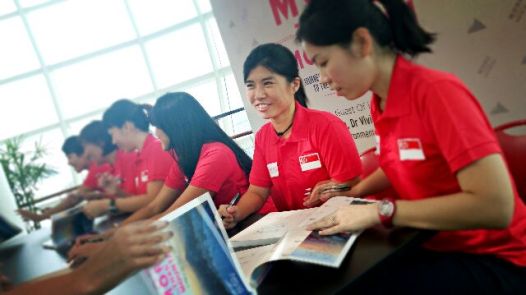
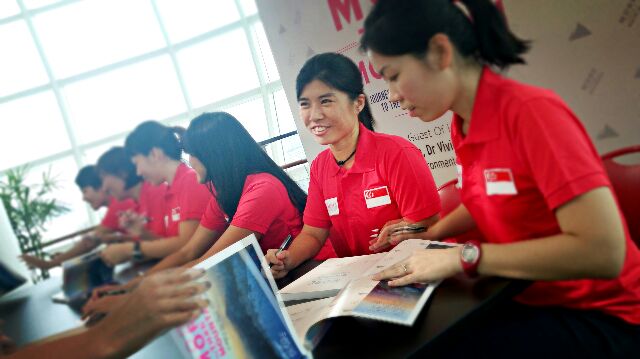
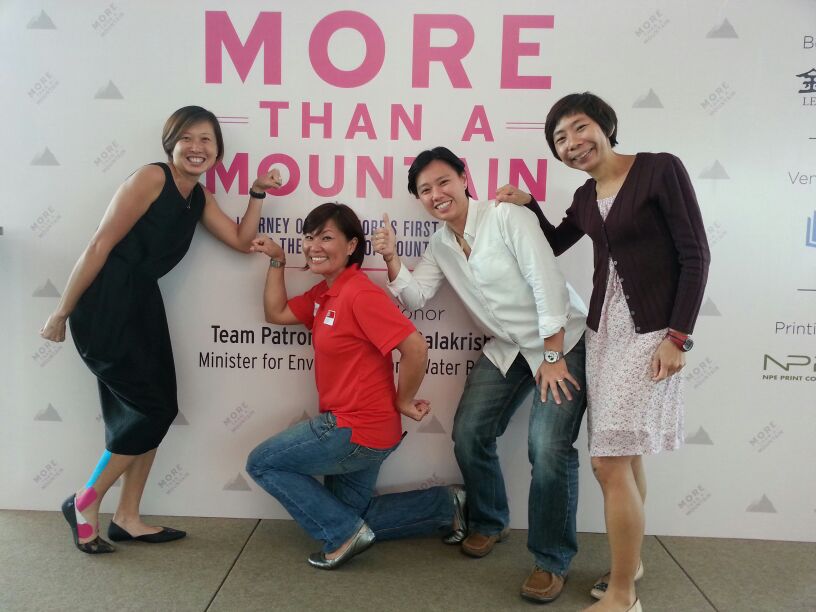
We really felt like we were celebrities at the book autograph session.

We really felt like we were celebrities (though we are really far from it) at the book autograph session.

Friends came forward to help us out for one more time.

Friends came forward to help us out for one more time.

IMG-20131110-WA0028

Over the years, friends are the one who helped us made things happened. The book launch was the same.
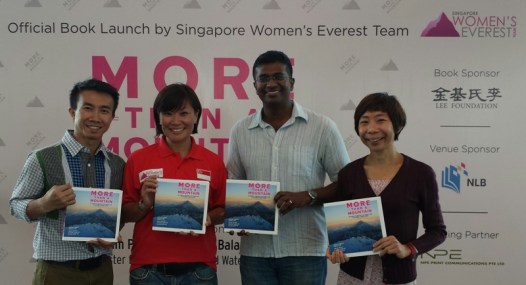
My climbing mates of Ama Dablam came to support our book launch.
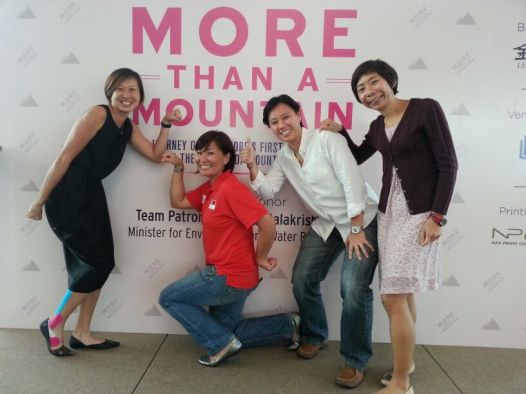
My climbing mates of Ama Dablam came to support our book launch.

Hong Kong Trail Walker Team (2013) will be leaving for Hong Kong on 14 Nov. Nice to prepare ourselves for more photo taking together :D

Hong Kong Trail Walker Team (2013) will be leaving for Hong Kong on 14 Nov. Nice to prepare ourselves for more photo taking together 😀

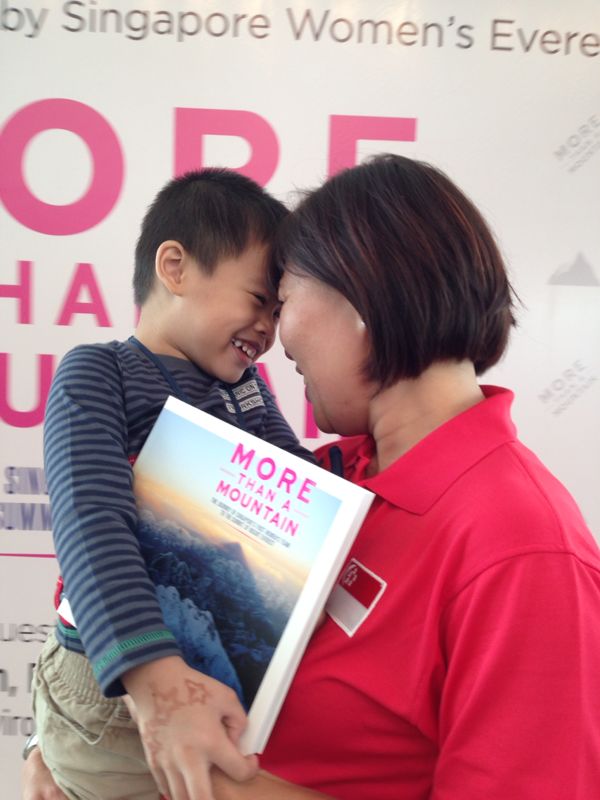
This photo has achieved more than 250 "Likes" on my Facebook post when I announced the launch of our book. Jaeden is definitely the real celebrity here.
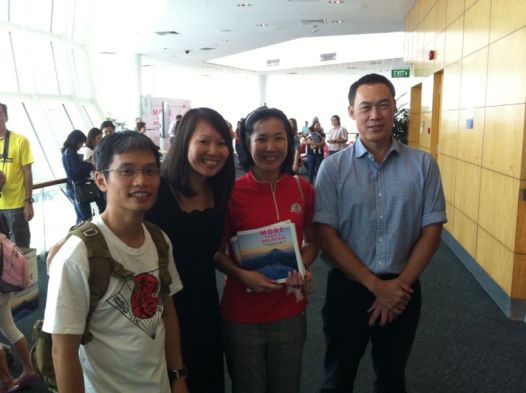
This photo has achieved more than 250 “Likes” on my Facebook post when I announced the launch of our book. Jaeden is definitely the real celebrity here.

The Stok Kangri team (Aug 2013) came to support our book launch too.

The Stok Kangri team (Aug 2013) came to support our book launch too.

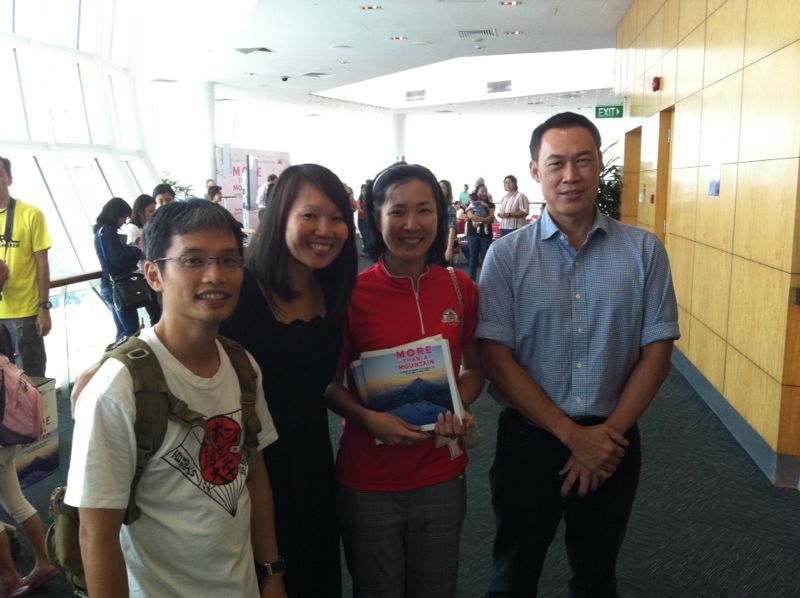
There were so many friends who came to support, but I just didn’t have much time to catch up or to take a photo with. Here are a few who came:
20131110_140939

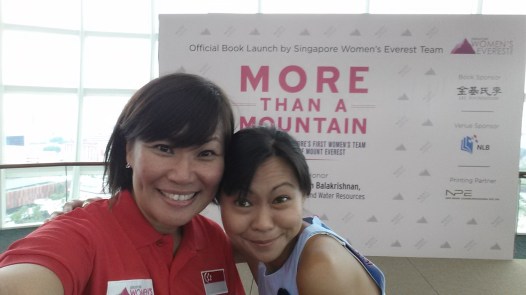
Wenn joined our SWET EBC trek and was at the base camp to support us during our climb. She also joined me for Island Peak climb in the autumn of 2011. Most hard-working supporter LOL

20131110_163208

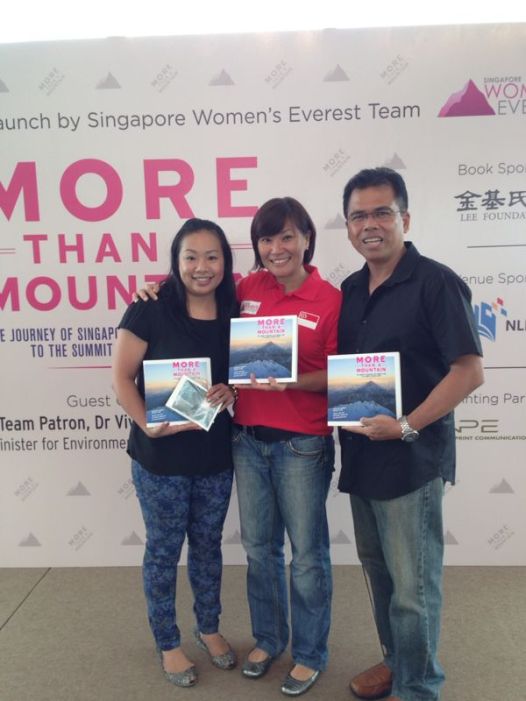
June has been very helpful in our planning. She got her school (Ngee Ann Poly) to agree to let us store our bulky logistic items before we sent them off to Kathmandu. She also helped us out at our Aspiring Mountaineers Programme, and part of the volunteer team to organise our send-off at the airport. As a personal friend, she made a video that comprises all the well wishes from my family and friends, it was sent to the base camp via the EBC support trekkers, it was meant for me to view it when I get bored. But it sent tears to me instead.  A resourceful supporter haha 🙂
IMG-20131110-WA0015

Juansa and Dean got married on the day I flew out to Kathmandu to climb (21 March 2009). I missed their wedding, and they could not see me off at the airport too. Now, they took time to attend our book launch with their children. Most enthusiastic supporters

I am really thankful to my friends who not only came to support, but also continue to volunteer their time to ensure our launch was seamless. These lovely friends are Jack Chen, Pazel Chen, Vinnie Tan, Karen Go, Joyce Low, Carmen Lee, Cherly Lim, Chin KK, Clarence Yap, and Catherine Siew.

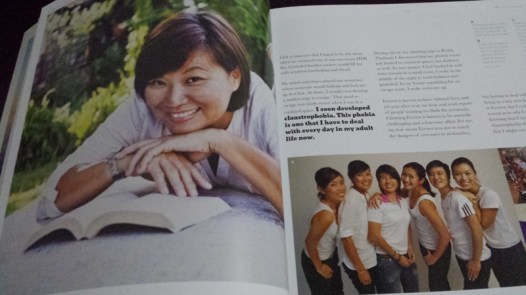
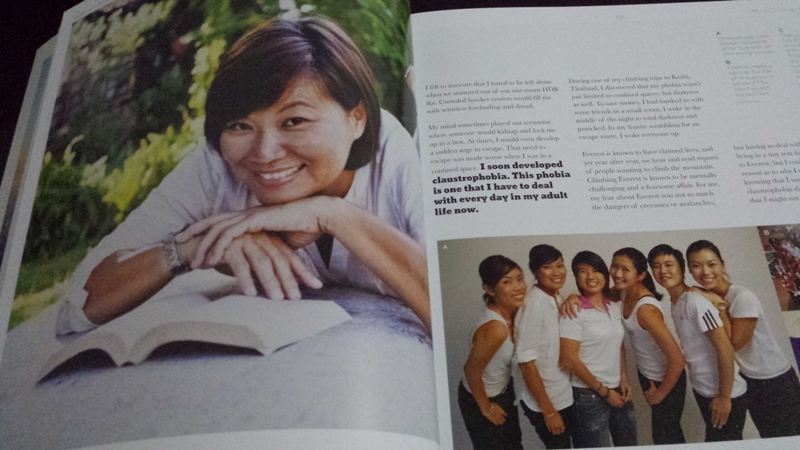
Here is a preview page of my chapter.

BOOK1

BOOK2Penning our thoughts was just one part of the process in getting this book out. Putting it together – 6 members’ chapters into one, getting the right illustrator to design our book, agreeing to the photo on the book cover, choosing the photos for the chapters, and many more; it felt like climbing another Everest. We are glad that we are able to share our story with more people now.

I had spent many hours writing my story, but a hard disk clashed sent all my writing to no-where-to-be-found. I had to re-write everything, but definitely not able to re-write all that I had written earlier.  A friend gave me an idea to write another book to document my experiences!  I could not imagine doing it without my teammates, so I shall put the idea on hold – indefinitely.
Island Peak turned Extreme Cold

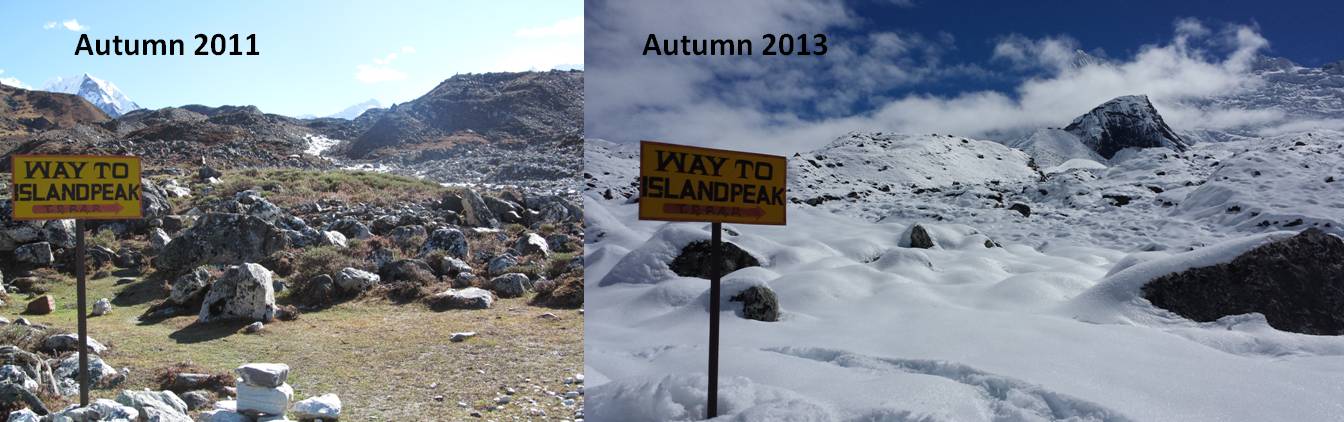
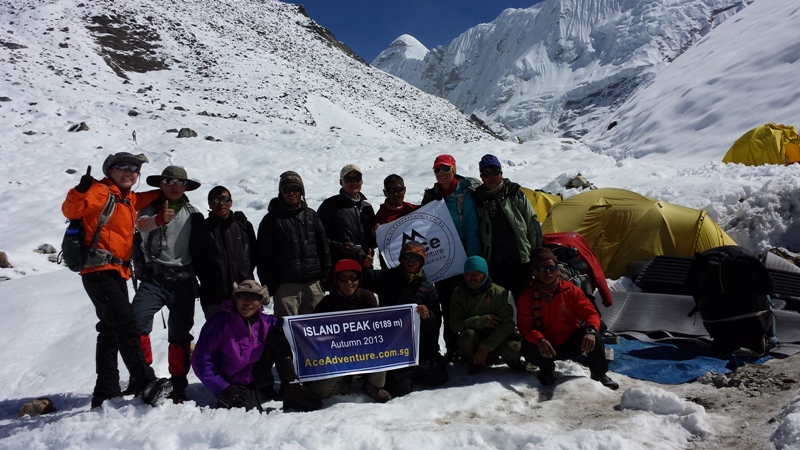
It was supposed to be an autumn climb, but it turned out to be more like a climb in the winter. The weather was good when we started our trek from Lukla to Thengboche.

Namche

Everest view point near Namche

Thengboche

Clear day at Thengboche (3860m a.s.l.)

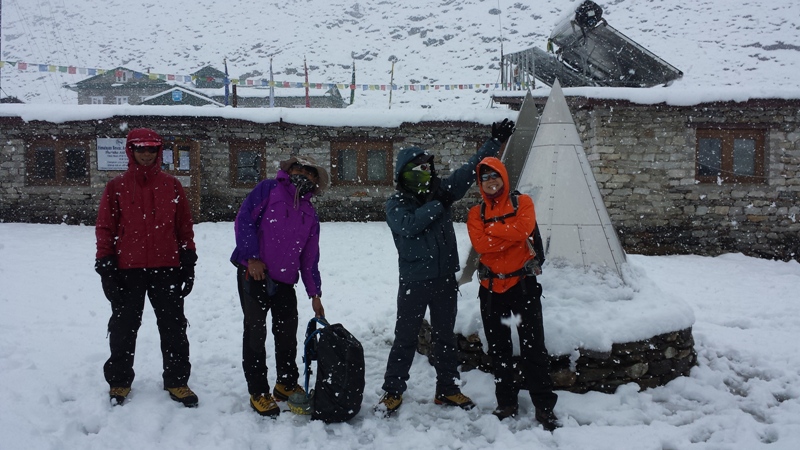
When the cyclone hit the Bay of Bengal which affected the eastern parts of Nepal, we had arrived at Pheriche (4200m a.s.l). According to the reports from The Himalayan Times , ” It rained at some places in the eastern Nepal, and the Kathmandu Valley also witnessed a drizzle this morning and afternoon.”  The lower lands experienced long hours of rain, while at the Everest region, we experienced two full days of snow that painted the villages white. It was like a dream winter-land overnight and, Christmas arrived earlier than expected!

Periche 2013

Pheriche on 14th Oct 2013, after more than 12 hours of snow fall.

Pheriche (team)

Team posed outside the Himalayan Rescue Association and the Everest Memorial Monument at Pheriche (4200m a.s.l)

The journey after Pheriche was tougher than my previous climb. It was colder, and the trail was covered with icy snow that made every steps heavier on the legs. Our team wore the double boots to trek from Dingboche to the base camp. 

IP Autumn

The trail in Chhukung leading to Island Peak base camp

Trekking to the base camp

When I saw the snow field near Chhukkung, my heart sank. I had suspected that the summit climb could be impossible to even attempt. That night, a team that went ahead of us to the base camp had turned back to Chhukung, in view of that, we stayed at Chhukung for another night. When we eventually made our way to the base camp, we also met many disappointed climbers moving out of the base camp, most had barely gone beyond the high camp on their summit attempt.

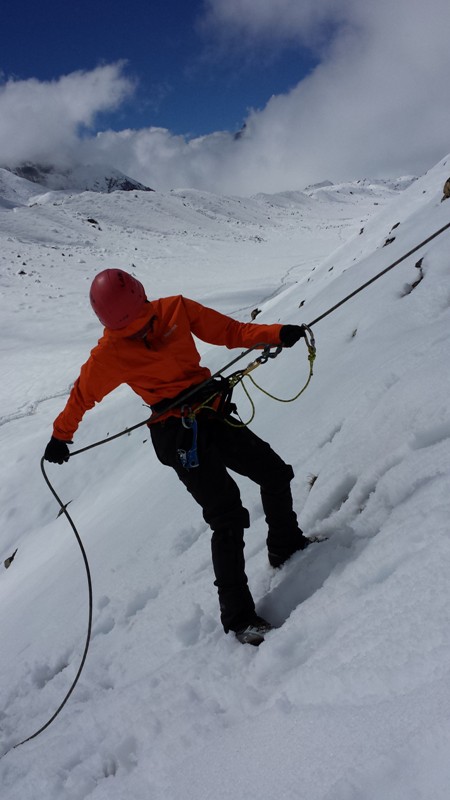
Nevertheless, we made use of our rest day at the base camp to practice some rope works like abseiling and handling the ascenders.

IP base camp abseil

Abseil practice at the base camp (5007m a.s.l.)

IP base camp

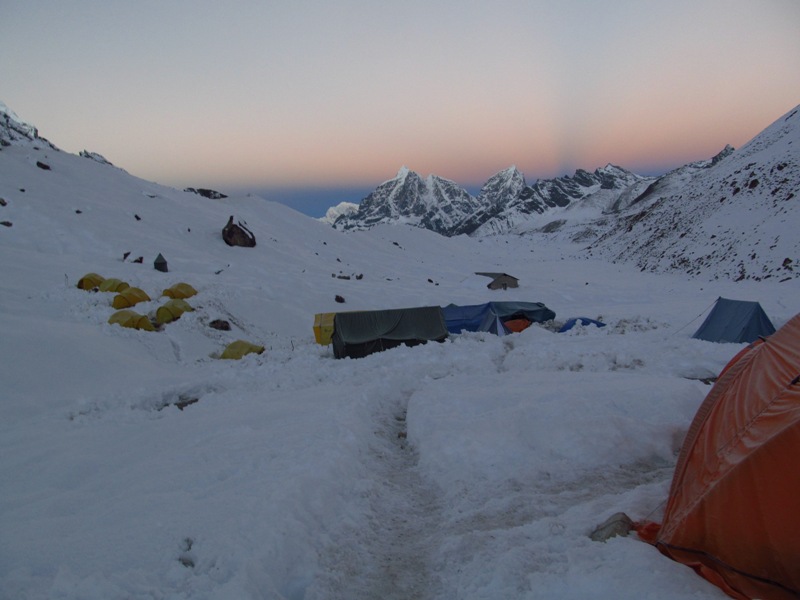
The base camp that filled with knee-deep snow, some of the tents were still buried in it.

The mood at the base camp was gloomy; we saw teams leaving with heavy hearts, and new teams arriving with much less hope. We certainly felt the depressing atmosphere, however, we still prepared ourselves for the not-so-hopeful summit attempt.

We left the base camp at 2.30am, aiming to get as far as we could.

The air was still, but it got colder as we moved away from the base camp. It was in fact a perfect morning for a summit climb. As we climbed towards the high camp, we noted that the teams ahead of us were not progressing any further. At this point, my hands were freezing cold; I had to change to my down mittens. I decided to turn around as I felt excruciating pain on my chest earlier, and as I ascent, the pain became more apparent and unbearable. So, I turned around while the rest proceed.  After 30mins or so after I made my descent, our team also decided to return to the base camp as the teams ahead were making no progress. Our climbing guides eventually brought news to us that a team had arrived at the “crampon point’ but could not establish a decent trail up the glacier.

We gathered back at the base camp at 6am, after some rest and food, we made our way back to Dingboche. For me, it was a relieve to be able to descend soonest as I had feared that my chest pain would deteriorate if I stay any longer at that elevation.

Base camp at dawn after returning from the high camp

Base camp at dawn after returning from the high camp

A group shot at the base camp before descent to Dingboche.

A group shot at the base camp before descending to Dingboche.

As we left Pangboche, the snow trail were melting and it brought out a majestic Ama Dablam in the background.

As we left Pangboche, the snow on the trail were melting and it brought out a majestic Ama Dablam in the background.

We stopped at Khumjung and Namche, then to Lukla to catch our flight back to Kathmandu. Though we did not get close to the summit, the trek had given my team the opportunity to practice snow walking with crampon and abseil on snow slopes, and to experience the extreme weather patterns in the Himalayas. There will always be another climb, because the mountain is always there.

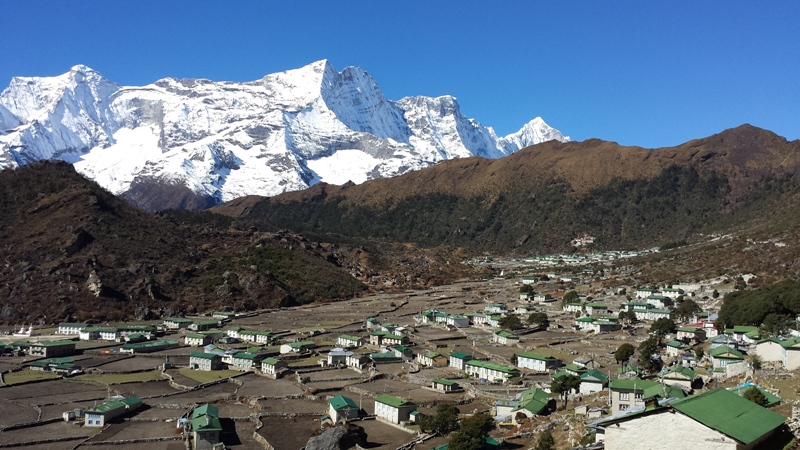
Khumjung & Kunde

View of Khumjung and Kunde

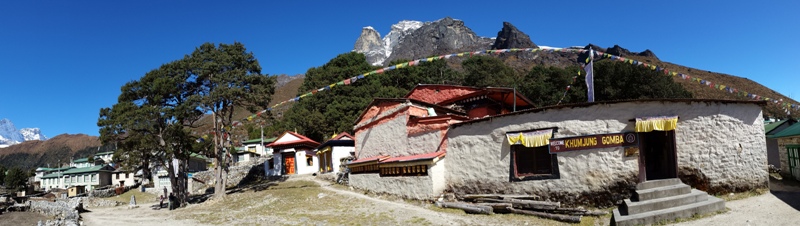
Khumjung Gompa

Khumjung Gompa

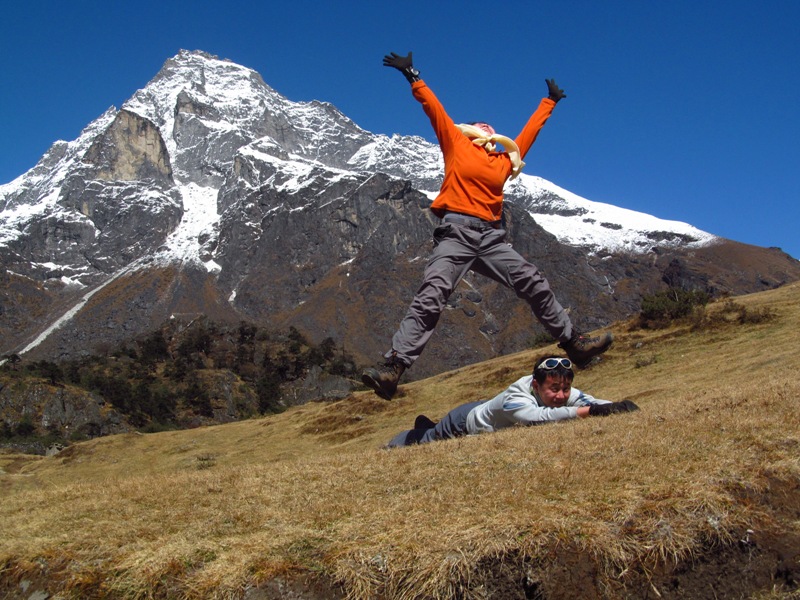
The newly wed couple jumping for joy!

The newly wed couple jumping for joy!

 NAMASTE.

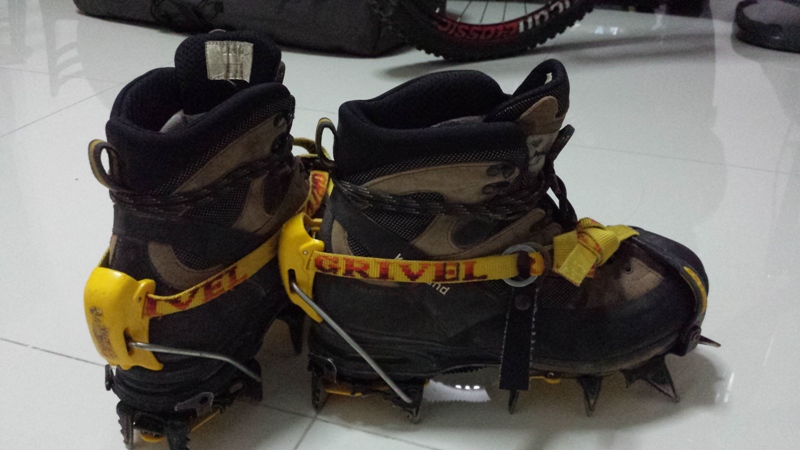
Trekking Boots

Crampon Compatible Boots (low res)

This is a crampon compatible trekking boots. It is most suitable for trekking in the alps where crampons maybe required at elevations around 2000m and above. I will be using it for the upcoming climb on Stok Kangri. As this is now the summer season in the Stok Range, this boot will serve well at that elevation. It is waterproof and breathable. I have used it on my approach trek on Ama Dablam (6812m), Island Peak (6189m), Mt Damavand (5612m), and base camp treks. Attached to the boot is the very versatile Grivel G12 crampon. It has been up on Mt Everest, Cho Oyu, Ama Dablam, Aconcagua, Island Peak, and Ice climbing with me. Picking the right equipment will help you to avoid having to make unnecessary purchases.

Trek with Joanne to Everest Base Camp

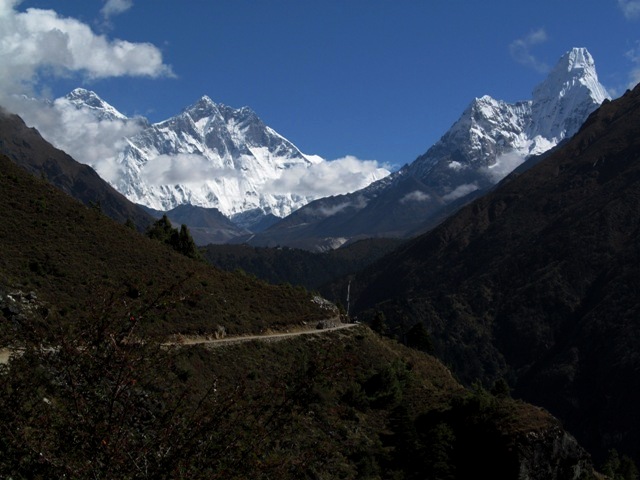
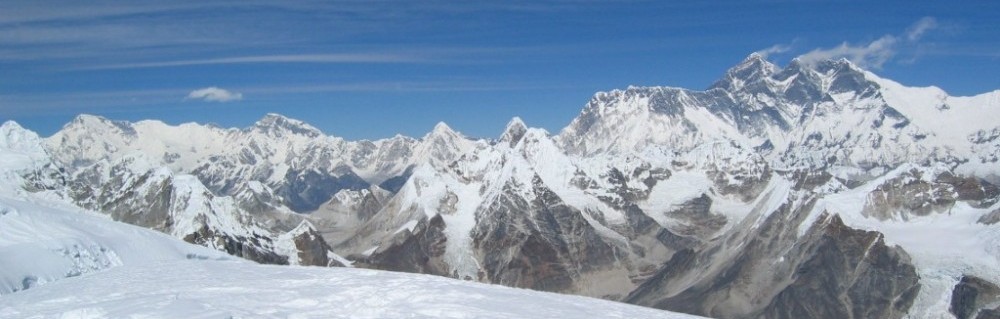
View of Mt Everest, Lhotse, and Ama Dablam enroute to Everest Base Camp

View of Mt Everest, Lhotse, and Ama Dablam enroute to Everest Base Camp

2013 marks the 60th anniversary of the first ascent on Mount Everest by Tenzing Norgay and Sir Edmund Hillary. It was a momentous event in history when they took their triumphant steps onto the top of the world on the 29th May 1953. Since then many climbers have followed in their footsteps, including climbers from Singapore – a little red dot on the world map with no mountainous landscape.

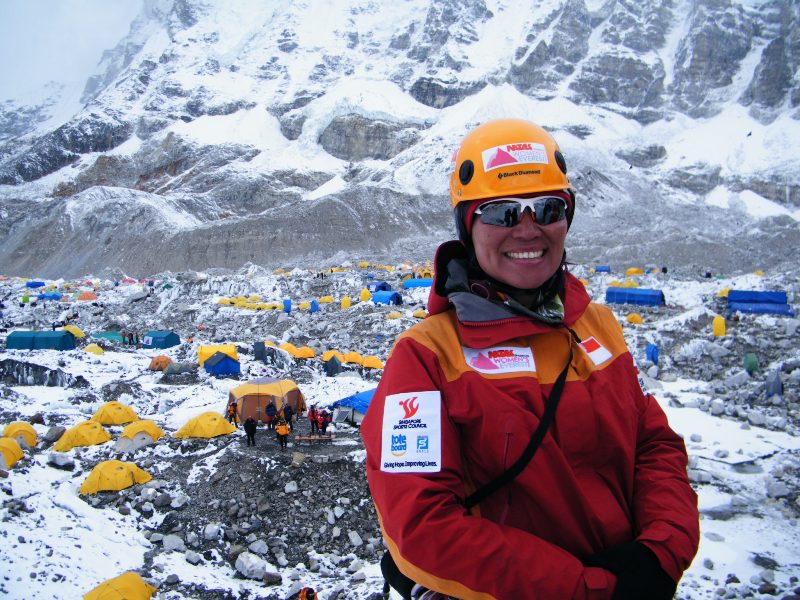
Four years ago, together with a team of Singaporean women, I followed the path of many aspiring mountaineers to scale Mount Everest. The life at the base camp is still very vivid to me. At the base camp, we could hear the ice tumbling down to the glacier floor, and the noise of avalanches was blasted out like a home surround sound system.  It was scary yet the environment emitted a surreal sensation that everything was under control. The glacier moved little by little, change was constant. The sleeping tent that I slept in was  sinking into the shape of my back.  I had to adjust my tent to avoid sleeping on hollows.  Despite all these, Everest Base Camp remained to be an attractive place. The camp was filled with the voice of prayers, sherpas’ chirpy chats, and best of all, a common goal that all individuals shared – the summit, and a safe return.

I climbed up an ice wall to have a broader view of the Everest Base Camp

I climbed up an ice wall to have a broader view of the Everest Base Camp

To commemorate  the 60th Anniversary of the memorable moment of the 1st ascent of Mt Everest, I am reaching out to you to form a team with me to embark on a 20 days expedition to the Everest Base Camp (EBC). This expedition hopes to expand the story about ordinary people achieving extraordinary results by tracing the footsteps of the Everest climbers to the Base Camp.

The 20 days expedition will also give the team a rare chance to spend a night at the Everest Base Camp (approx 5300m a.s.l.) to experience life at the Base Camp where every Everest ascent expedition teams stay for 4 – 8 weeks to acclimatize to the altitude and prepare for their summit attempts.

Expedition Dates: Sun, 7 April to Fri, 26 April 2013

Everest Base Camp trek is one of the best adventure trekking destinations in Nepal. The experience on the trek is everything an adventure traveler could asked for. The breath taking views of the snow-capped mountain ranges are simply undeniably attractive, and the experience of the daily routine of high altitude living offers individual an opportunity to discover the inner strength hidden within. The unique one night stay at the Everest base camp will allow us to witness the life of an Everest climber, the support crew, and the climbing sherpas – the unsung heros of the world’s tallest mountain. We are expecting to arrive at the base camp on the 18th of April, it is exactly at the hype of Everest expeditions acclimatization phase . You get to witness climbers leaving the camp for their acclimatization climbs (or we called it the rotation climbs), and some would have returned to the camp to rest. By the early month of May, almost all climbers will be getting ready for the summit push. Guess what, this will also be the first time for me to return to the base camp after having spent a good 6 weeks of my Everest expedition there 4 years ago.

Brief Itinerary

Day Dates Location
1 Sun, 7 Apr Singapore – Kathmandu
2 Mon, 8 Apr Kathmandu
3-11 Tue, 9 Apr – Wed, 17 Apr Trekking starts from Lukla
12 Thu, 18 Apr Arrive at EBC
13-17 Fri, 19 Apr – Tue, 23 April Leave EBC, return trek to Lukla
18 Wed, 24 Apr Contingency day
19 Thu, 25 Apr Kathmandu
20 Fri, 26 Apr Kathmandu – Singapore

The expedition is also supported by some of the original local Nepalese crew of the Singapore Women’s Everest Team

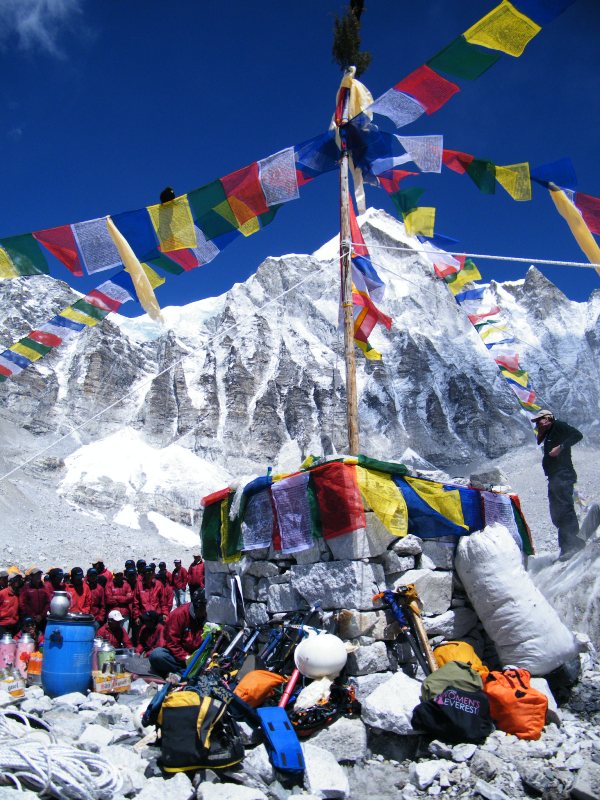
The base camp came alive with the puja (prayers) ceremony. Climbers also brought out climbing gear for blessings.

The base camp came alive with the puja (prayers) ceremony. Climbers also brought out climbing gear for blessings.

Contact me at joannesclimb@gmail.com for details of the trek. Or, simply leave a message here.

Mountaineering Woes

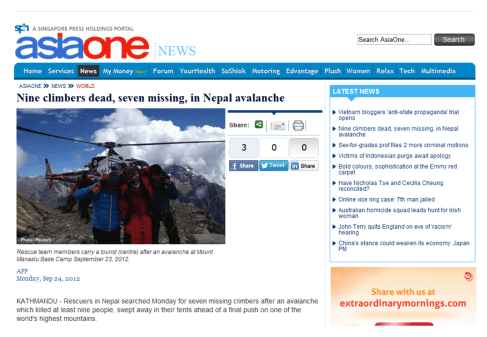
Over the weekend, I had organised a good friend’s birthday celebration. Her birthday is significant to her and her two boys because it is also her hubby’s (her boys’ daddy) death anniversary. Death is always hated by the living. I dislike death, though I know no one is immune to death. I am especially sad to know that people die while doing what they enjoyed most. Perhaps I should see it positively that it is so much happier to die while enjoying than to die of suffering or of illness. But ultimately, death is still an end to a living, a pain for the living. The celebration weekend ended with a tragic news. An avalanche had hit Camp 3 of Manaslu, killing 9 climbers, and several are still missing at this time that I am writing.

To the climbers who perished, Rest In Peace. There is still some hope that those missing ones can be found and be rescued. That’s if the weather permits, and making rescue at 7300m is no easy task. It is risky for the rescuers too. Just hope that the snow and ice can be stabilized soon.

There is no way we can avoid such risk in the mountains. The only way to avoid is to not to climb at all. How possible is it for a mountaineer?  Can you not cross a road knowing that you might be knock down by a reckless driver?

Image

About Manaslu

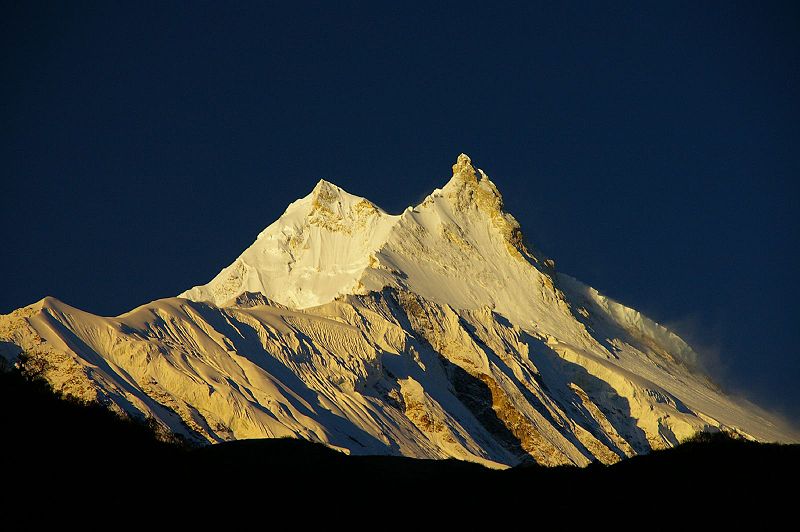
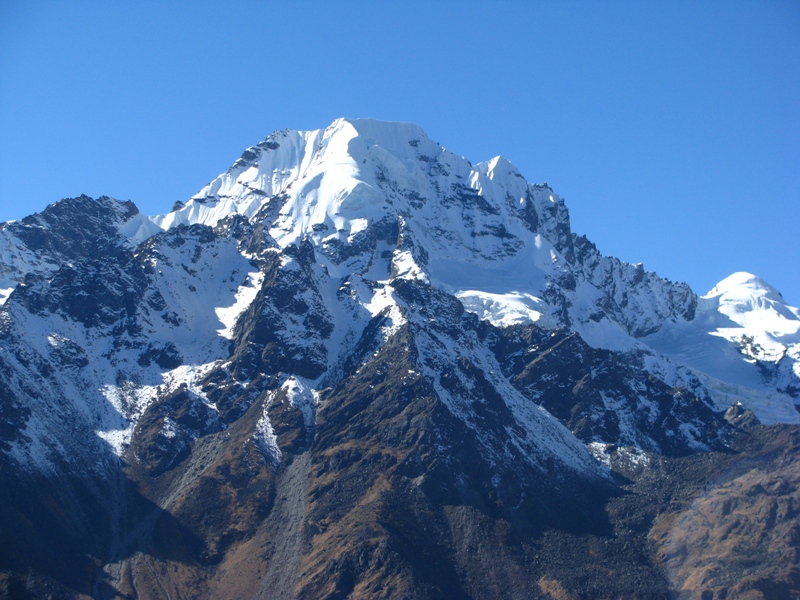
Manaslu (also known as Kutang) is the eighth highest mountain in the world, and is located in the Mansiri Himal,  part of the Nepalese Himalayas, in the west-central part of Nepal. Its name, which means “Mountain of the Spirit”, comes from the Sanskrit word Manasa, meaning “intellect” or “soul”. Manaslu was first climbed on May 9, 1956 by Toshio Imanishi and Gyalzen Norbu, members of a Japanese expedition. It is said that “just as the British consider Mt Everest their mountain, Manaslu has always been a Japanese mountain 

Manaslu at 8,156 metres (26,759 ft) above sea level (m.s.l) is the highest peak in the Lamjung District and is located about forty miles east of Annapurna. The mountain’s long ridges and valley glaciers offer feasible approaches from all directions, and culminate in a peak that towers steeply above its surrounding landscape, and is a dominant feature when viewed from afar.

Sunrise on Manaslu, 8,156m, the world’s 8th highest mountain.

Source: http://en.wikipedia.org/wiki/File:Sunrise,_Manaslu.jpg

Naya Kanga Next

I have made an attempt on Naya Kanga in December 2008, I didn’t reach the summit. I was just 200m below the peak, about 2hrs away. The main reason was we didn’t have sufficient rope to get up. I was confident to climb without rope, but I wasn’t confident that my climbing mates would be as competent without rope. So, I made the call to abort the climb. I didn’t want to summit by myself, as I fear that if I proceed, I would insinuate the rest to push on. I believe I made the right call. The mountain is always there. So, I am planning for a repeat climb. I hope to close up 2012 with a climb in Nepal, and Naya Kanga came to my mind.

Naya Kanga from Kyangjin Ri

Naya Kanga, also known as Ganjala Chuli, is situated in the region of Langtang, a beautiful remote valley north of Kathmandu, bordering Tibet . To get to the closest village to start our trek, we will need to take a bus ride from Kathmandu to Sybrus Bensi. The bus ride should take about 8hrs. In the same region, there is a popular lake called  Gosainkund Lake. We will need about 18-20days to climb Naya Kanga (5,844m), and to include Gosainkund Lake, we will need another 3-4days.

Looking into the mountain range of Tibet, and Kyanjin Ri from the North-East ridge of Naya Kanga

The point on the North-East ridge where I had to turn around. Just about 2hrs away from the summit.

I am planning to climb it in December 2012, more like a winter ascend. Got to start my planning soon. Now I have a goal. Climb On! =)

Love-Hate Climbing Photos

Here are some of the awesome photos of me taken by my fellow climbing mates during our recent attempt on Mt Elbrus, Russia. Frankly speaking, I love them all, but they (some) don’t always bring out the best of me. Just for a laugh, if you wish!

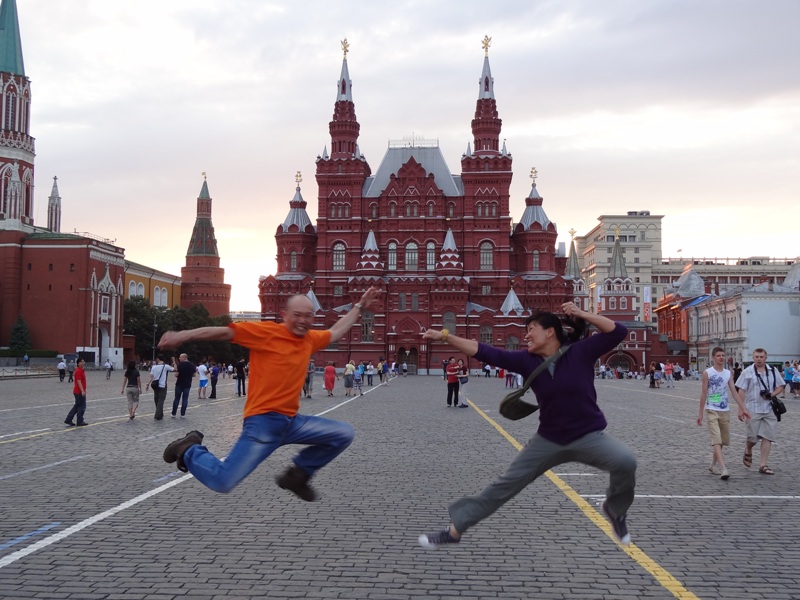
I love this jump shot. For the first time, I managed a kick ass pose. But I still didn’t look quite flexible. Will try harder next time! (photo courtesy of Clarence Yap) – @ the Red Square, Moscow, Russia

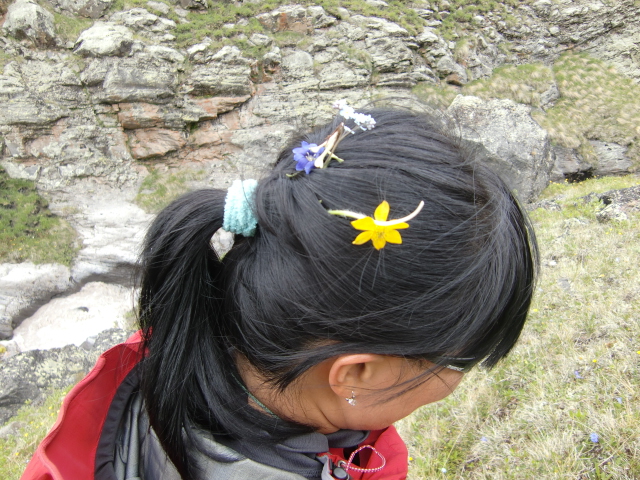
I saw beautiful flowers near the campsite. I plucked some off and leave them on my hair. Now, I feel guilty of it, I should have just leave them alone! (photo courtesy of Klaus Kaiser) – @ near base camp of Mt Elbrus, North Route.

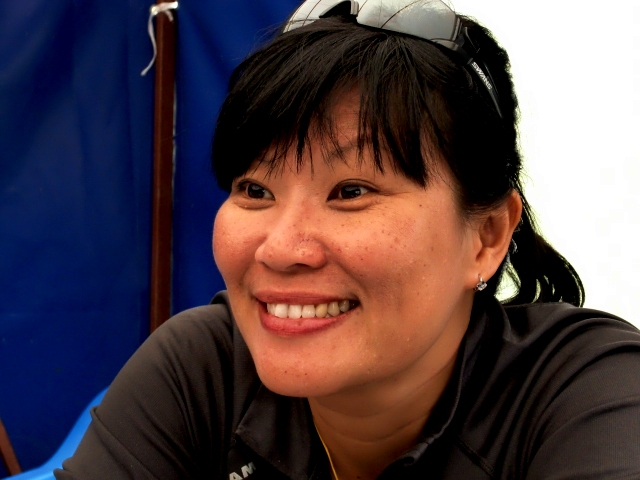
Nice photo angle of me. But look at those freckles! they look like pot-holes on my face. Freak. (photo courtesy of Klaus Kaiser) – @ Base Camp, Dgily-Su area at the northern foot of Mt Elbrus

I was caught in an act. I love this comic like photo. (photo courtesy of Thiam Huat) – @Camp 1, Mt Elbrus, North Route.

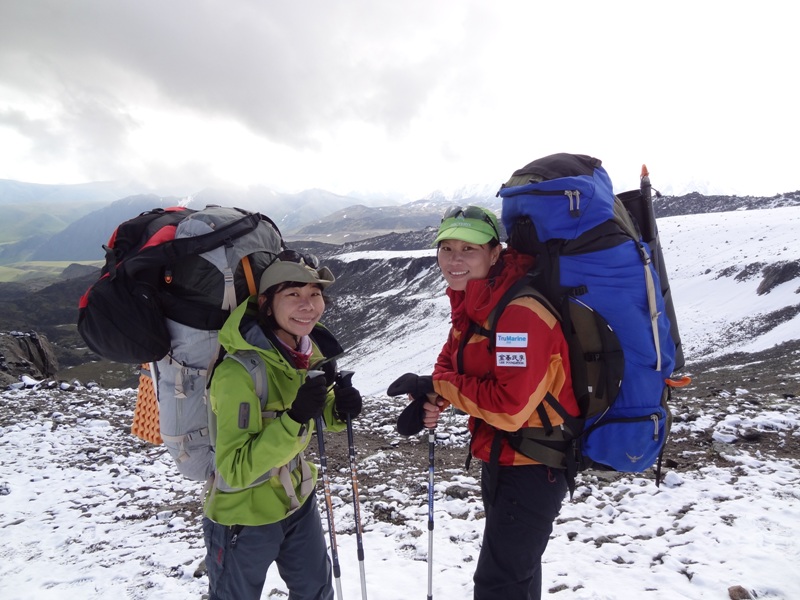
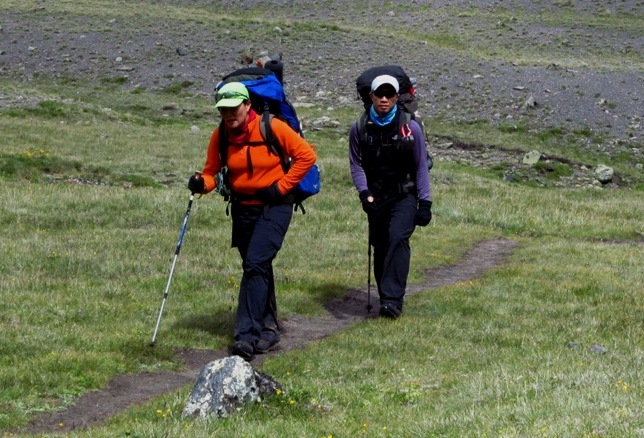
I didn’t know my backpack was so HUGE! Look at Joyce, she is certainly stronger than me for she is so tiny. (photo courtesy of Clarence Yap) – @North Route, Mt Elbrus, descending to base camp.

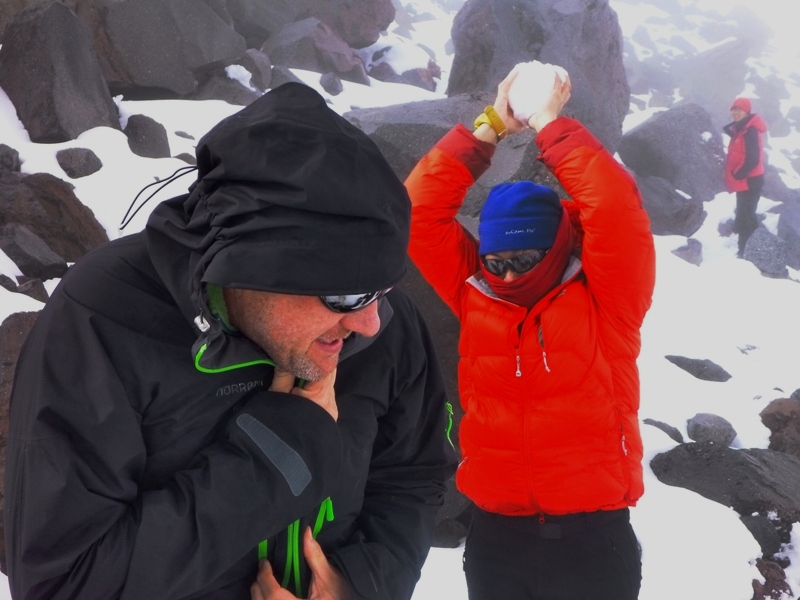
OMG! Look at that awful chunk of beer belly. This is the MOST unflattering photo of my life. No wonder I cannot get to the summit this time! Shitty, I can’t convince anyone I climbed Everest. (photo courtesy of Joyce Low) – @North Route, Mt Elbrus, ascending to Camp 1.
This is terribly good because they say people in a team move towards the same direction. (photo courtesy of Thiam Huat) – @enroute to Mineralnye Vody, Kislovodsk.

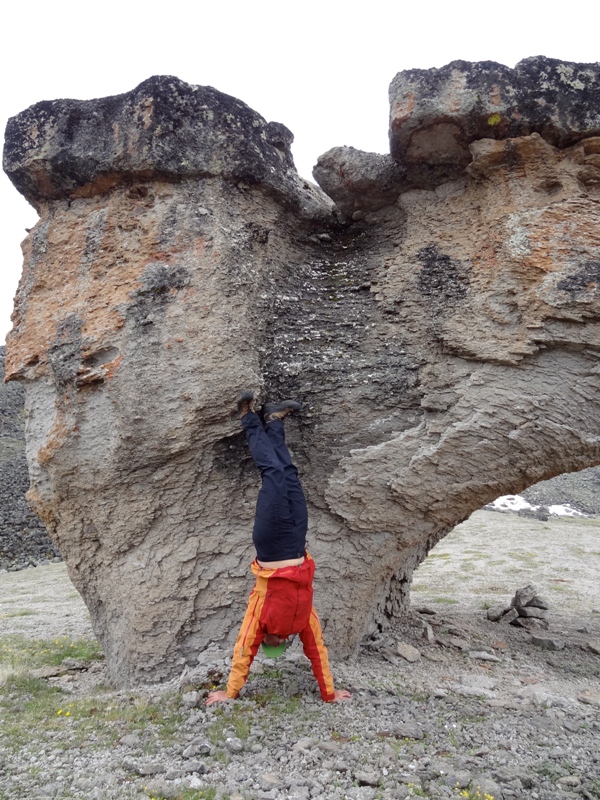
I almost didn’t quite get this right. Thanks to the split second of pause on the camera shutter. (photo courtesy of Clarence Yap) -@ the Mushroom rock, North route, Mt Elbrus.

I climb anything – with my epic face. (photo courtesy of Clarence Yap) – @ a park in Mineralyne Vody

Unsuccessful on Europe’s highest

Just got back from climbing Mt Elbrus. I have led a team of 8 to attempt the North route of Mt Elbrus. The first from Singapore, I guess (not important anyway).

The day we arrived at the base camp after a 3-4hrs bumpy ride from Kislovodsk

No one guaranteed a summit. When I arrived at 5,200m, the bottom of the East summit, my guide told me that we will not proceed to the West summit. The West peak is the highest point on Mt Elbrus, to claim that you have climbed Mt Elbrus, one has to be on the West summit.

I was very disappointed, because we still have plenty of time when we arrived at the big rock below the East summit. It takes about 2.5hrs (or lesser on a more compact snow trail) to climb up to the East summit. But the deep snow piled up by the heavy snow fall the past 2-3 days made the climb to the West summit very tedious. No one wanted or even keen to continue as the breaking trail would be an “ass-fool” effort.

Rebelliously, I chose not to even ascend further. I refused to climb up to the East summit. I chose to descend. As I descent, I was planning to return again, probably July/Aug 2013.

I will put up a more detailed report about the climb on a new page at a later date.

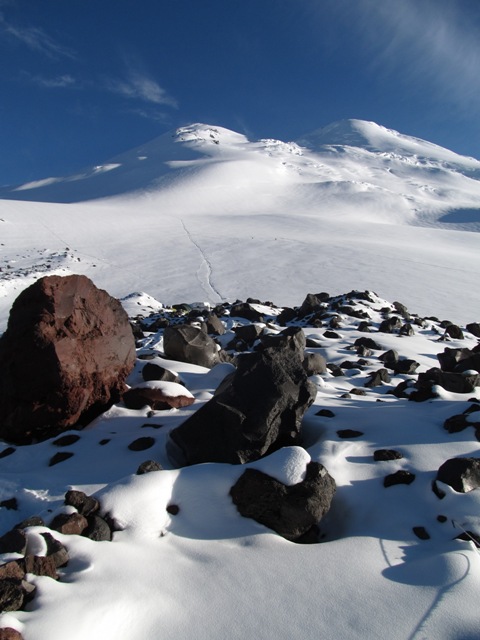
A clear view of the East and West (R) peaks of Mt Elbrus from Camp 1 (or high camp) on the North route.