Unknown's avatar

About joannesclimb

Live to dream, dream to live. Climb a mountain, mountains to climb. There are too many climbs, too little time. Slowly and steadily, the tortoise will get to the top. Life is too short to idle.

New shoes Old plans

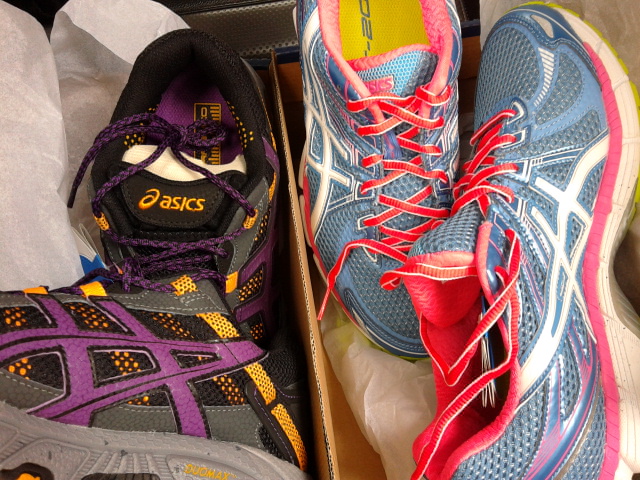
I spent a weekend at Queensway Shopping Centre to hunt for a new pair of running shoes, and trail shoes. Queensway Shopping Centre is still one of the favorite shopping malls by many. I am impressed, many shops had new branding and offer more choices than before.

After shortlisted a few pairs of shoes, I made up my mind to stick to Asics. Asics is still my favorite brand of choice. Now, I have no reason not to run.

Asics Shoes (NEW)

Trek with Joanne to Everest Base Camp

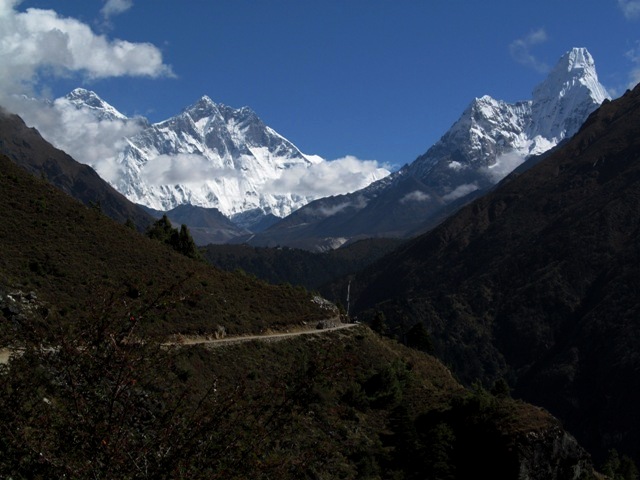
View of Mt Everest, Lhotse, and Ama Dablam enroute to Everest Base Camp

View of Mt Everest, Lhotse, and Ama Dablam enroute to Everest Base Camp

2013 marks the 60th anniversary of the first ascent on Mount Everest by Tenzing Norgay and Sir Edmund Hillary. It was a momentous event in history when they took their triumphant steps onto the top of the world on the 29th May 1953. Since then many climbers have followed in their footsteps, including climbers from Singapore – a little red dot on the world map with no mountainous landscape.

Four years ago, together with a team of Singaporean women, I followed the path of many aspiring mountaineers to scale Mount Everest. The life at the base camp is still very vivid to me. At the base camp, we could hear the ice tumbling down to the glacier floor, and the noise of avalanches was blasted out like a home surround sound system.  It was scary yet the environment emitted a surreal sensation that everything was under control. The glacier moved little by little, change was constant. The sleeping tent that I slept in was  sinking into the shape of my back.  I had to adjust my tent to avoid sleeping on hollows.  Despite all these, Everest Base Camp remained to be an attractive place. The camp was filled with the voice of prayers, sherpas’ chirpy chats, and best of all, a common goal that all individuals shared – the summit, and a safe return.

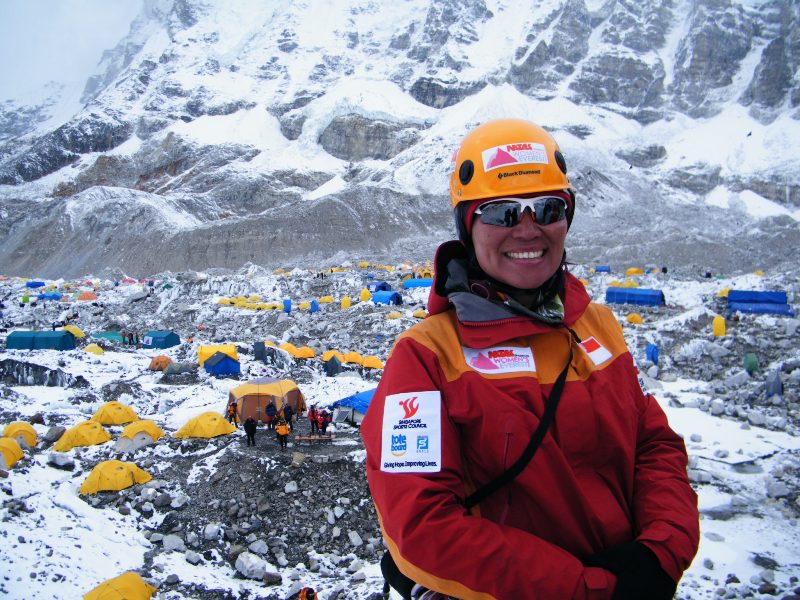
I climbed up an ice wall to have a broader view of the Everest Base Camp

I climbed up an ice wall to have a broader view of the Everest Base Camp

To commemorate  the 60th Anniversary of the memorable moment of the 1st ascent of Mt Everest, I am reaching out to you to form a team with me to embark on a 20 days expedition to the Everest Base Camp (EBC). This expedition hopes to expand the story about ordinary people achieving extraordinary results by tracing the footsteps of the Everest climbers to the Base Camp.

The 20 days expedition will also give the team a rare chance to spend a night at the Everest Base Camp (approx 5300m a.s.l.) to experience life at the Base Camp where every Everest ascent expedition teams stay for 4 – 8 weeks to acclimatize to the altitude and prepare for their summit attempts.

Expedition Dates: Sun, 7 April to Fri, 26 April 2013

Everest Base Camp trek is one of the best adventure trekking destinations in Nepal. The experience on the trek is everything an adventure traveler could asked for. The breath taking views of the snow-capped mountain ranges are simply undeniably attractive, and the experience of the daily routine of high altitude living offers individual an opportunity to discover the inner strength hidden within. The unique one night stay at the Everest base camp will allow us to witness the life of an Everest climber, the support crew, and the climbing sherpas – the unsung heros of the world’s tallest mountain. We are expecting to arrive at the base camp on the 18th of April, it is exactly at the hype of Everest expeditions acclimatization phase . You get to witness climbers leaving the camp for their acclimatization climbs (or we called it the rotation climbs), and some would have returned to the camp to rest. By the early month of May, almost all climbers will be getting ready for the summit push. Guess what, this will also be the first time for me to return to the base camp after having spent a good 6 weeks of my Everest expedition there 4 years ago.

Brief Itinerary

Day Dates Location
1 Sun, 7 Apr Singapore – Kathmandu
2 Mon, 8 Apr Kathmandu
3-11 Tue, 9 Apr – Wed, 17 Apr Trekking starts from Lukla
12 Thu, 18 Apr Arrive at EBC
13-17 Fri, 19 Apr – Tue, 23 April Leave EBC, return trek to Lukla
18 Wed, 24 Apr Contingency day
19 Thu, 25 Apr Kathmandu
20 Fri, 26 Apr Kathmandu – Singapore

The expedition is also supported by some of the original local Nepalese crew of the Singapore Women’s Everest Team

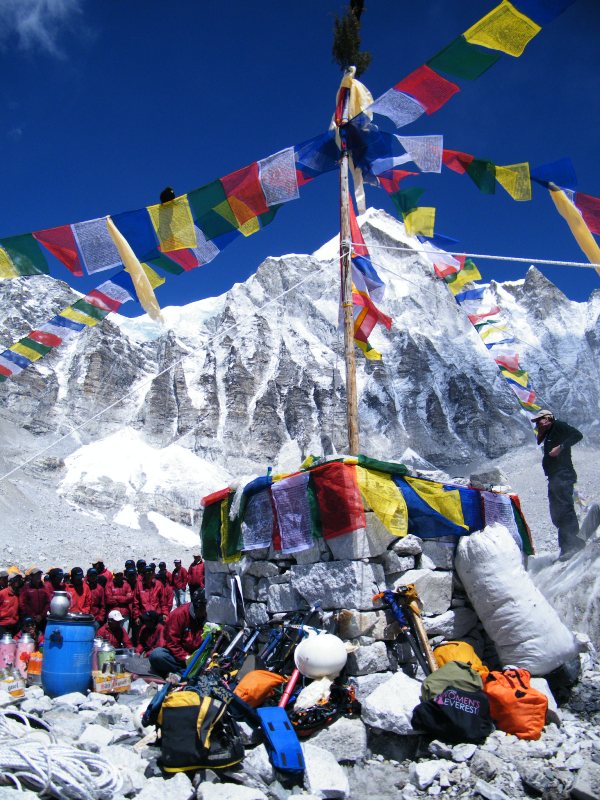
The base camp came alive with the puja (prayers) ceremony. Climbers also brought out climbing gear for blessings.

The base camp came alive with the puja (prayers) ceremony. Climbers also brought out climbing gear for blessings.

Contact me at joannesclimb@gmail.com for details of the trek. Or, simply leave a message here.

Mountaineering Woes

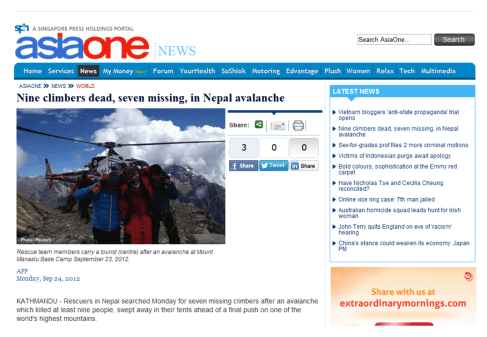
Over the weekend, I had organised a good friend’s birthday celebration. Her birthday is significant to her and her two boys because it is also her hubby’s (her boys’ daddy) death anniversary. Death is always hated by the living. I dislike death, though I know no one is immune to death. I am especially sad to know that people die while doing what they enjoyed most. Perhaps I should see it positively that it is so much happier to die while enjoying than to die of suffering or of illness. But ultimately, death is still an end to a living, a pain for the living. The celebration weekend ended with a tragic news. An avalanche had hit Camp 3 of Manaslu, killing 9 climbers, and several are still missing at this time that I am writing.

To the climbers who perished, Rest In Peace. There is still some hope that those missing ones can be found and be rescued. That’s if the weather permits, and making rescue at 7300m is no easy task. It is risky for the rescuers too. Just hope that the snow and ice can be stabilized soon.

There is no way we can avoid such risk in the mountains. The only way to avoid is to not to climb at all. How possible is it for a mountaineer?  Can you not cross a road knowing that you might be knock down by a reckless driver?

Image

About Manaslu

Manaslu (also known as Kutang) is the eighth highest mountain in the world, and is located in the Mansiri Himal,  part of the Nepalese Himalayas, in the west-central part of Nepal. Its name, which means “Mountain of the Spirit”, comes from the Sanskrit word Manasa, meaning “intellect” or “soul”. Manaslu was first climbed on May 9, 1956 by Toshio Imanishi and Gyalzen Norbu, members of a Japanese expedition. It is said that “just as the British consider Mt Everest their mountain, Manaslu has always been a Japanese mountain 

Manaslu at 8,156 metres (26,759 ft) above sea level (m.s.l) is the highest peak in the Lamjung District and is located about forty miles east of Annapurna. The mountain’s long ridges and valley glaciers offer feasible approaches from all directions, and culminate in a peak that towers steeply above its surrounding landscape, and is a dominant feature when viewed from afar.

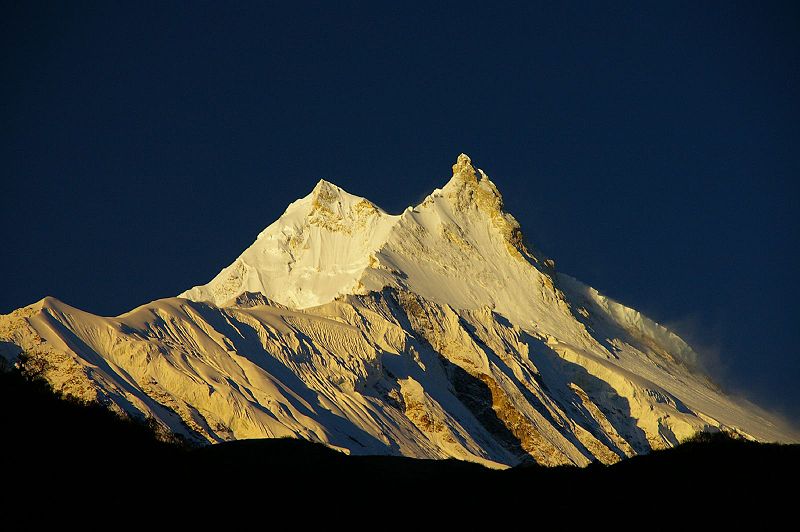
Sunrise on Manaslu, 8,156m, the world’s 8th highest mountain.

Source: http://en.wikipedia.org/wiki/File:Sunrise,_Manaslu.jpg

Naya Kanga Next

I have made an attempt on Naya Kanga in December 2008, I didn’t reach the summit. I was just 200m below the peak, about 2hrs away. The main reason was we didn’t have sufficient rope to get up. I was confident to climb without rope, but I wasn’t confident that my climbing mates would be as competent without rope. So, I made the call to abort the climb. I didn’t want to summit by myself, as I fear that if I proceed, I would insinuate the rest to push on. I believe I made the right call. The mountain is always there. So, I am planning for a repeat climb. I hope to close up 2012 with a climb in Nepal, and Naya Kanga came to my mind.

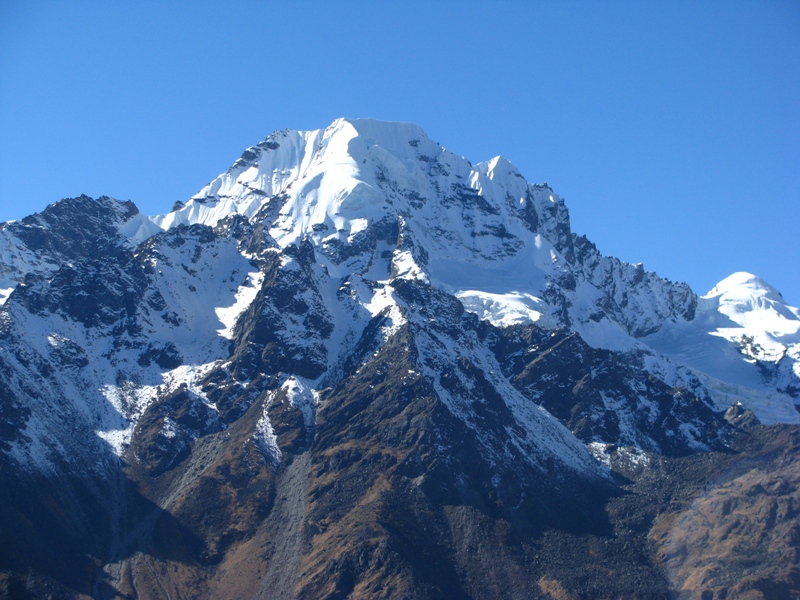
Naya Kanga from Kyangjin Ri

Naya Kanga, also known as Ganjala Chuli, is situated in the region of Langtang, a beautiful remote valley north of Kathmandu, bordering Tibet . To get to the closest village to start our trek, we will need to take a bus ride from Kathmandu to Sybrus Bensi. The bus ride should take about 8hrs. In the same region, there is a popular lake called  Gosainkund Lake. We will need about 18-20days to climb Naya Kanga (5,844m), and to include Gosainkund Lake, we will need another 3-4days.

Looking into the mountain range of Tibet, and Kyanjin Ri from the North-East ridge of Naya Kanga

The point on the North-East ridge where I had to turn around. Just about 2hrs away from the summit.

I am planning to climb it in December 2012, more like a winter ascend. Got to start my planning soon. Now I have a goal. Climb On! =)

Love-Hate Climbing Photos

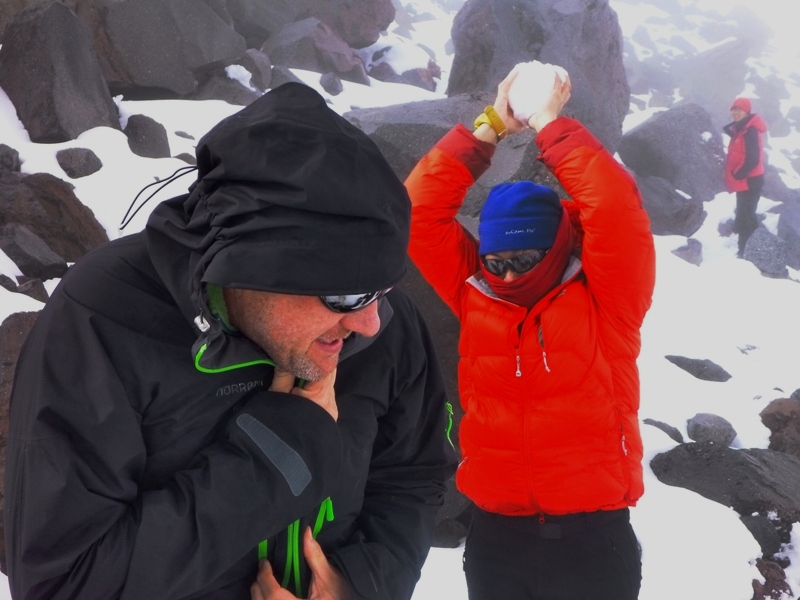
Here are some of the awesome photos of me taken by my fellow climbing mates during our recent attempt on Mt Elbrus, Russia. Frankly speaking, I love them all, but they (some) don’t always bring out the best of me. Just for a laugh, if you wish!

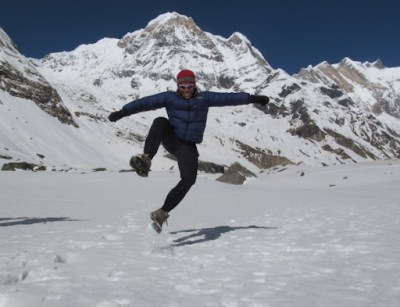
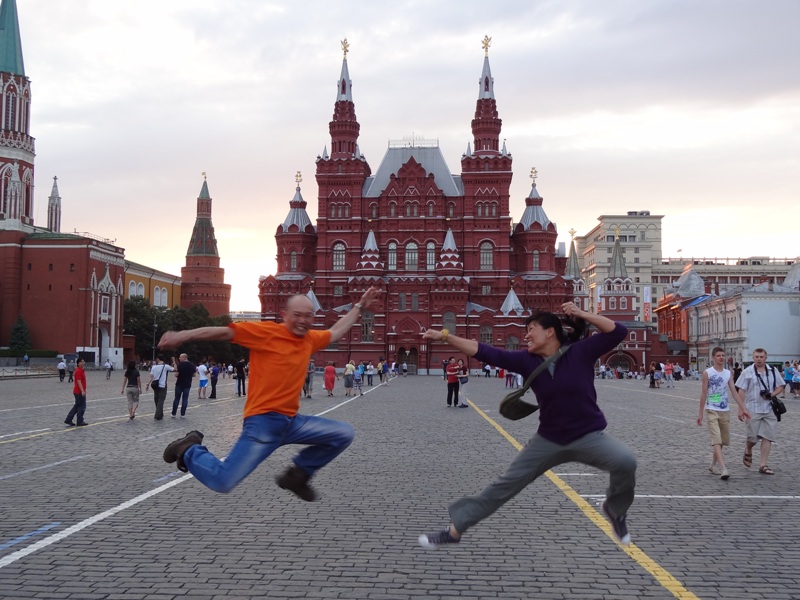
I love this jump shot. For the first time, I managed a kick ass pose. But I still didn’t look quite flexible. Will try harder next time! (photo courtesy of Clarence Yap) – @ the Red Square, Moscow, Russia

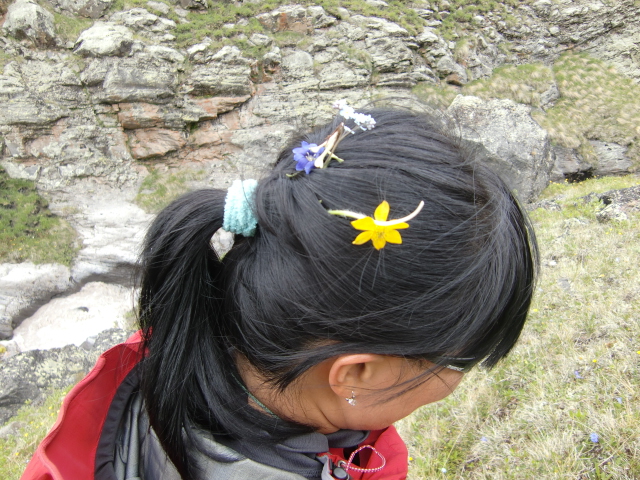
I saw beautiful flowers near the campsite. I plucked some off and leave them on my hair. Now, I feel guilty of it, I should have just leave them alone! (photo courtesy of Klaus Kaiser) – @ near base camp of Mt Elbrus, North Route.

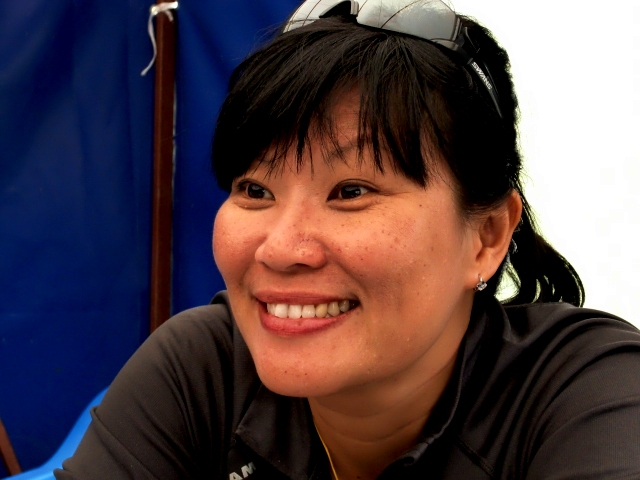
Nice photo angle of me. But look at those freckles! they look like pot-holes on my face. Freak. (photo courtesy of Klaus Kaiser) – @ Base Camp, Dgily-Su area at the northern foot of Mt Elbrus

I was caught in an act. I love this comic like photo. (photo courtesy of Thiam Huat) – @Camp 1, Mt Elbrus, North Route.

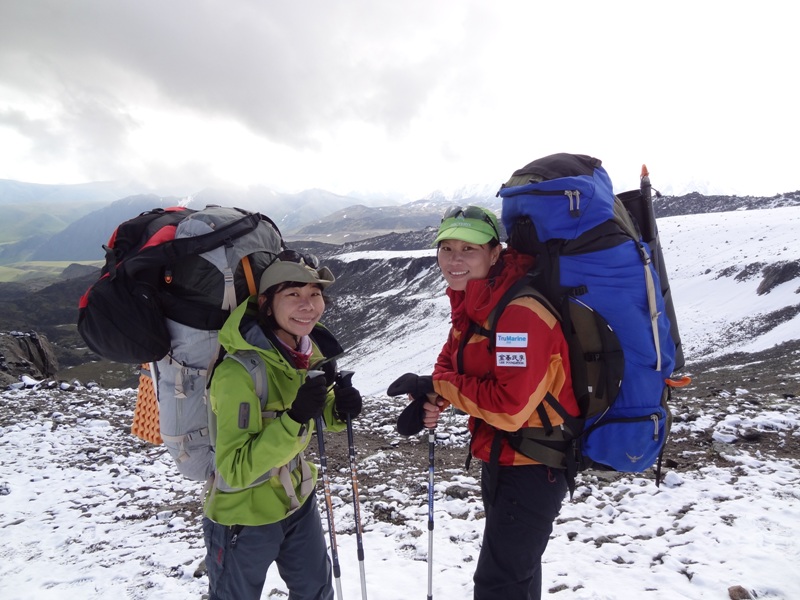
I didn’t know my backpack was so HUGE! Look at Joyce, she is certainly stronger than me for she is so tiny. (photo courtesy of Clarence Yap) – @North Route, Mt Elbrus, descending to base camp.

OMG! Look at that awful chunk of beer belly. This is the MOST unflattering photo of my life. No wonder I cannot get to the summit this time! Shitty, I can’t convince anyone I climbed Everest. (photo courtesy of Joyce Low) – @North Route, Mt Elbrus, ascending to Camp 1.

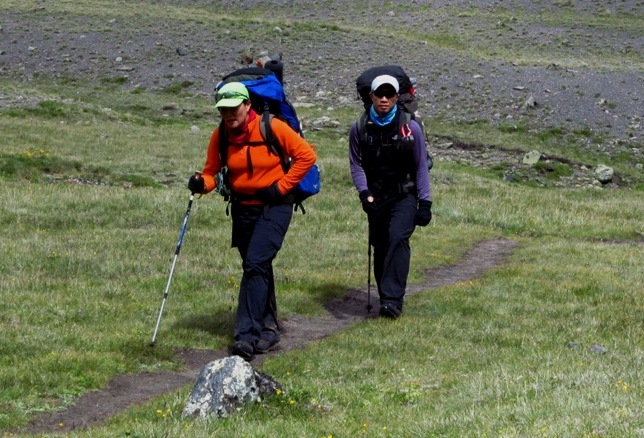
This is terribly good because they say people in a team move towards the same direction. (photo courtesy of Thiam Huat) – @enroute to Mineralnye Vody, Kislovodsk.

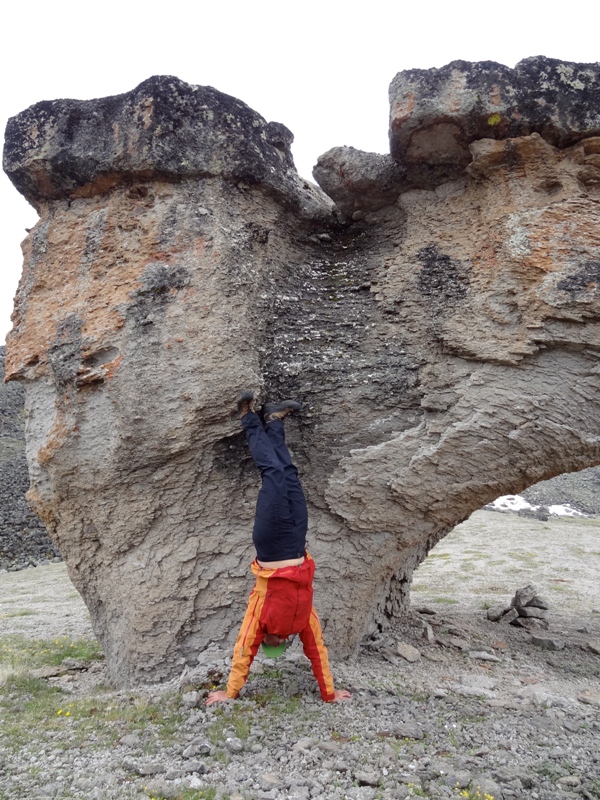
I almost didn’t quite get this right. Thanks to the split second of pause on the camera shutter. (photo courtesy of Clarence Yap) -@ the Mushroom rock, North route, Mt Elbrus.

I climb anything – with my epic face. (photo courtesy of Clarence Yap) – @ a park in Mineralyne Vody

Unsuccessful on Europe’s highest

Just got back from climbing Mt Elbrus. I have led a team of 8 to attempt the North route of Mt Elbrus. The first from Singapore, I guess (not important anyway).

The day we arrived at the base camp after a 3-4hrs bumpy ride from Kislovodsk

No one guaranteed a summit. When I arrived at 5,200m, the bottom of the East summit, my guide told me that we will not proceed to the West summit. The West peak is the highest point on Mt Elbrus, to claim that you have climbed Mt Elbrus, one has to be on the West summit.

I was very disappointed, because we still have plenty of time when we arrived at the big rock below the East summit. It takes about 2.5hrs (or lesser on a more compact snow trail) to climb up to the East summit. But the deep snow piled up by the heavy snow fall the past 2-3 days made the climb to the West summit very tedious. No one wanted or even keen to continue as the breaking trail would be an “ass-fool” effort.

Rebelliously, I chose not to even ascend further. I refused to climb up to the East summit. I chose to descend. As I descent, I was planning to return again, probably July/Aug 2013.

I will put up a more detailed report about the climb on a new page at a later date.

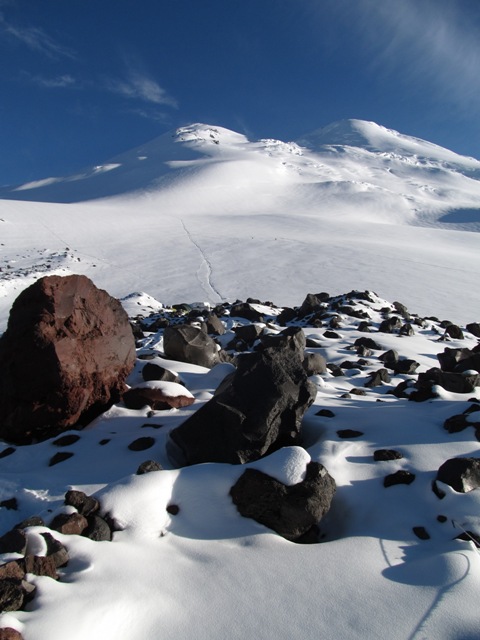
A clear view of the East and West (R) peaks of Mt Elbrus from Camp 1 (or high camp) on the North route.

Girls Who Climb (Part 1)

In most articles about climbing, some would comment that climbing is a male dominated sport. I used to think the same too. However, looking at my Facebook friends’ list, majority of my female friends are climbers (I shall leave my female schoolmates aside). In one way or another, my female friends would at least be a climber once, or be involved in climbing related activities at least once if not regularly.What constitute a climber? In my own opinion, anyone who scale heights is a climber.

Once a climber, always a climber. A rock climber is a climber, a mountain climber is a climber. Hmmm, so is a trekker a climber? Only you have the answer. What do I think, then? I say, yes.

Nevertheless, my purpose of putting up this post is to introduce a few new friends whom I have the opportunity to be connected with; they are girls who climb.

My first candidate of the few is Nur Hafiizah. Her group of friends in our recent Nepal trek to Annapurna Base Camp like to call her a Ninja. My primary understanding of this nick she has is probably because she wears a headscarf all the time. As I get to know this little angel more, I tend to agree with the Ninja persona she might have, hidden in her. Let’s put aside the folktales about the Japanese Ninjas who were supposedly specialized in unorthodox warfare. I am not referring to that.

Hafiizah, the little Ninja

Ninja did not always work alone, team work exist; they are highly skillful and independent. This is exactly what I perceived Hafiizah’s Ninja personal as. Throughout our entire 14days trek, she was highly independent. She knew how to manage her personal comfort in a hostile environment; I called this skills. She is a quiet and a good-natured girl.

I can’t help but to think about a question being posted to the group during our trek, it went something like:

Q:”At the end of the trek, guess who walks the furthest?”
A: “Ninja!”

Why so? Because this little Ninja is the shortest among the group, she probably needed to walk double the steps to cover the same distance as her group members. *EVIL THOUGHTS!* She is not called Ninja for nothing!

I see the inner strength in her and that she will probably be able to climb higher, a literal mountain and in all aspect of her life. Poised, is the word for her.

Annapurna Base Camp Trek

“We want to trek to the Annapurna base camp as a team and return…”

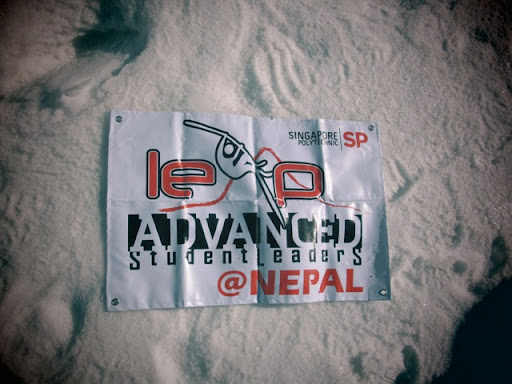
When I first heard about the Singapore Polytechnic (SP) Team Nepal’s goal on the Annapurna Base Camp (ABC) trek, I was confident, then, a little worried.  I was confident because the goal is simple. I was worried because the one liner team goal is so achievable but yet it will not be easy, simply because we have a big team. We have 19 students (age between 18 and 23) and 3 adults (including me). The probability of someone falling sick or be unmotivated to push on will be high. I kept reminding myself, we must have a good strategy to support this feat.

First and foremost, the students had gone through two sessions of workshop conducted by Adventure Quests – the trek organiser. The workshop focused on two main topics – 1) the fundamentals of trekking in high altitude; 2) understanding the risks of acute mountain sickness (AMS). The workshops proved to have a great effect to the outcome of the trek. Mr Christopher Tan, Lecturer, who was part of the staff team on this trek had highlighted to me that he found the pre-trip briefing and the workshops helped him immensely in preparing for the trek. During the trek, students had also consistently reminded one another on the pertinent points raised and shared at the workshops. And so, the pre-trip preparation was crucial, and this included the physical conditioning and training.

We can never be fully prepared, but we want to avoid being ill-prepared. With some careful reminders of the dos and don’ts, good team work, and self motivation, the team of 22 made it up to Poon Hill (3210m) and the Annapurna Base Camp (4130m) as planned. The team returned with the goal met, and in good spirit.
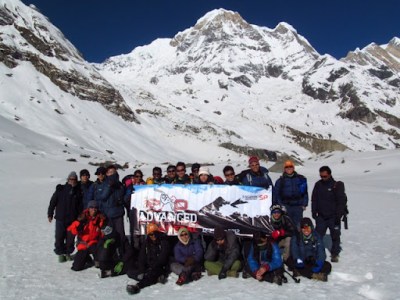
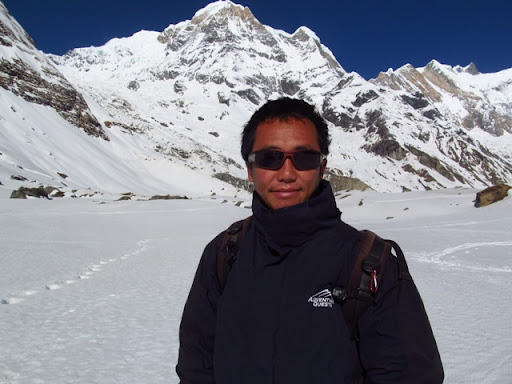
The SP Team Nepal at the Annapurna Base Camp (with Annapurna South on the background)

Our Sirda, MB

Apart from the pre-trip training and preparation we have in Singapore, the team of Nepali guides and porters from Adventure Quests played significant roles to this highly successful trekking expedition. It will be harder without the guides and porters. They were professional at all times in the dealing with the students, ensuring that our trek schedule was timely, and our daily meals were well coordinated. Our Sirdar, we called him MB, had successfully made us understood what it means to trek on a “Nepali flat” ground – a little bit up, and a little bit down …

MB introducing the team of porters to us

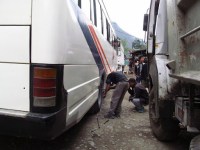
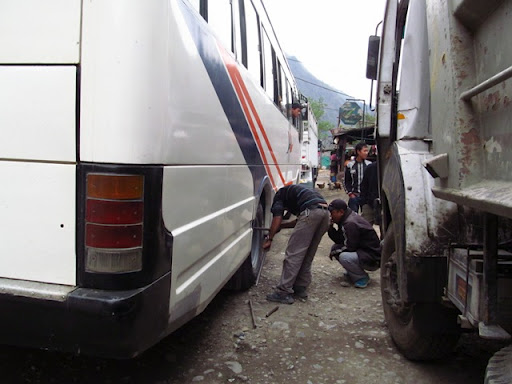
Fixing a punctured tyre;
A common scene on the highway streets of Nepal

What constitute a good experience? A little hiccup would make the trek more memorable I would say. A few hours into our overland journey towards Pokhara, one of the tyres punctured. We took a pee break, took a stroll along the streets, and be happy to be able to pull away from the butt slumberous pose for a while. You can choose to be a whimpering kid, if you wish. Experience is not what happens to us; it is what we do with what happens to us.

When we finally arrived at Nayapul, it started to rain. We had our first taste of an erratic weather patterns within a span of 30mins; it was warm at first, then it became windy, and then it was wet wet wet.
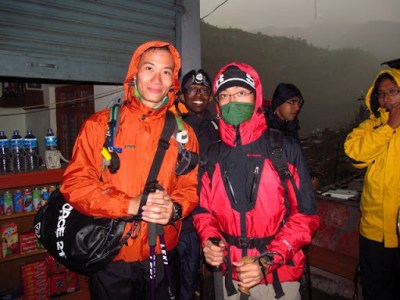
Nothing beats being prepared!
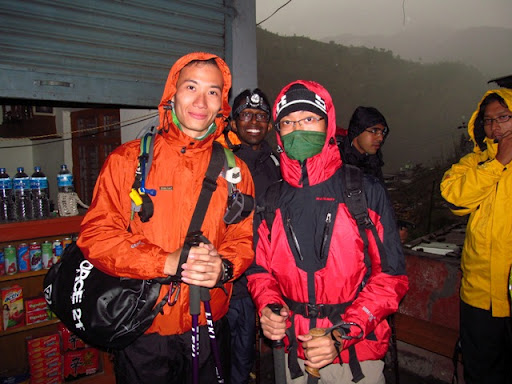
L-R: Clement, Raman and Wai Heng (Habib and Adil the extraz :p)

We rested at Birenthanti for the night, and set off to Ulleri the next day. We had a good start, though we were a little late from our preferred set off time. Looking through my daily entries on my diary, I wrote a liner on Day 1: Their walking pace was good; but they took a loooong time to getting ready in the morning.  I hope I don’t have to be a mother hen to these young trekkers.  
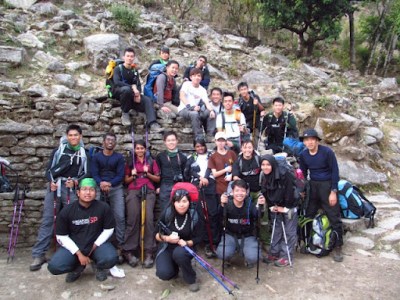
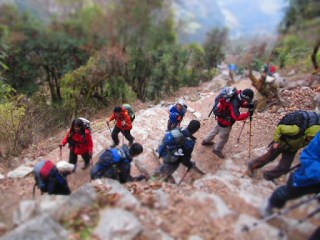
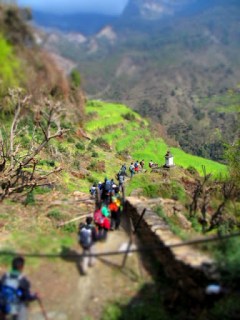
On our way to experiencing the infamous 3000 steps of granite stairs

I wonder who actually did bother to count the number of steps leading to Ulleri. If I did, I would have lost count. The ascent was steep, but we remain at a comfortable elevation of about 2000m a.s.l. The altitude didn’t bother us much, rather it was the mid-day heat that affected some of us. For Azri, he had nagging headache that simply didn’t go away fast. Since we were at an elevation of 2000m, it was highly unlikely that he had been affected by the lack of oxygen; I reckoned that he was suffering from some heat exhaustion.  To ensure that his condition didn’t snow ball down the days, Azri had been drinking diligently. He filled his water with isotonic drinks, and taking in electrolytes to replenish his fast losing sodium body in this hot-in-the-day-cold-in-the-night environment.  His body was certainly working really hard. Apart from that, I was also wary about the others’ overly active behaviour. Especially for the boys, they tend to like to run up the stairs when in the lodge. I made a conscientious effort to remind everyone not to be complacent with their health condition. Good hygiene habits remained as the top priority to staying healthy when traveling in remote areas. Some of them get to enjoy a hot shower at Ulleri’s Meera Lodge, while some had to brave the cold water as the sun set. As usual, I didn’t bother to shower :p, well, I have my wet wipes, hand sanitizer, and powder.
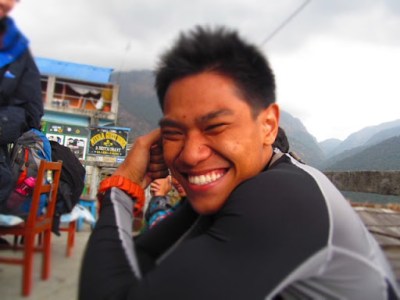
@ Ulleri: Azri keeping up with a big smile despite suffering from some heat exhaustion  

Cheryl aka the little chipmunk
stayed strong and bubbly
the whole time

Staying hydrated and eating well are the key factors to keeping good health at high elevation. My favorite combination had been Masala Tea, and Dhal Bhat for lunch and dinner. Somehow, I didn’t keep up with my Masala Tea this time; instead, Cheryl (I called her the little chipmunk) had been faithfully indulging in it.

Dhal Bhat 24hrs power! 

The next best sort after lunch and dinner choices was Pizza. I was indeed impressed with the servings and its varieties of pizza fillings in all forms of combination. Spaghetti and cheese were our top choices too. But for me, I held on to Dhal Bhat, and on the descent, I chose fried noodles. The kitchen at Annapurna region served better food compared to those at the Khumbu region (Everest). I guess this could be due to the elevation of the villages. The food didn’t taste quite as good as we ascent beyond 3000m.
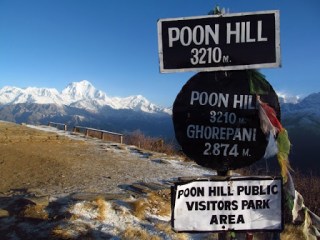
With Dhaulagiri (8167m) in the background,
the 7th highest peak in the world

Our itinerary was to climb up Poon Hill as part of our acclimatization in preparation for the Annapurna base camp at 4130m high. The highest point at Poon Hill has been recorded as 3210m. We made the ascent from Ghorephani (2840m) at 4.45am; it took us about 1.5hrs or less to reach the top of the hill. It was a cold morning; we wore our down jackets for the climb, and thankfully we did, it became very windy when we arrived at the top of the viewing tower.

The viewing tower did not look quite the same as the one I set foot on in 1998. The Poon Hill signs were new to me; and the idea of a makeshift drink stall was very enterprising; trekkers could conveniently buy hot drinks for a quick warm up, and to enjoy the scenic 360 degree view of the Annapurna and Dhaulagiri range.
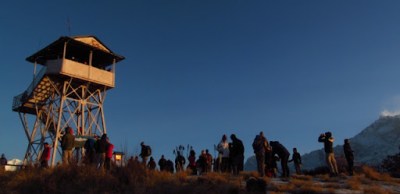
The viewing tower (far left) on Poon Hill
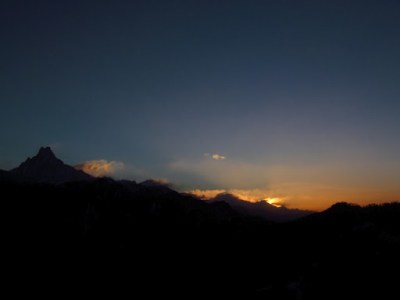
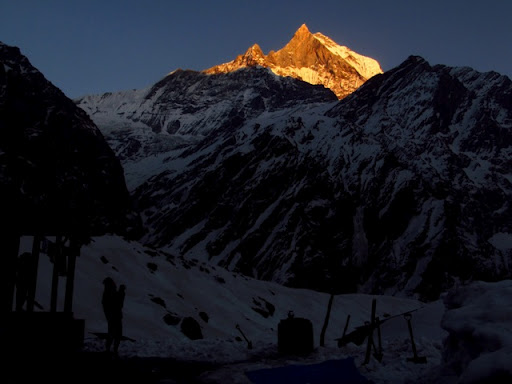
The sun rises slowly over Machapuchare (6993m), aka Mt Fish Tail 

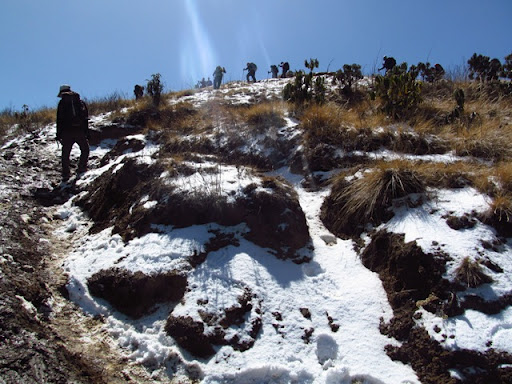
The day we arrived at Ghorephani, we experienced some mini hail storm which got everyone excited about. Before we set off for Poon Hill, it rain and snow the entire night. That made the trail a little trickier to negotiate, especially so for our team when almost all were walking on snow trail for the first time. The descent was made slippery by the morning sun; I saw at least 4-5 of them slipped on their butt. I could see the fear in some of them, including the boys. Most were reluctant to fall, making each careful step that slowed down the descent. We needed to quickly return to the lodge, pack up a little and made our way to our next rest point, Tadapani, before dusk. About 30mins leaving Ghorepani, we were confronted with a series of slippery snow and muddy trails. It made the trek harder than expected. We took a long time to reach our lunch point, shortly after 3pm to be exact. Fatigue already set into some of us, and we had to fuel up fast and push on for another 2-3hrs to arrive at Tadapani.
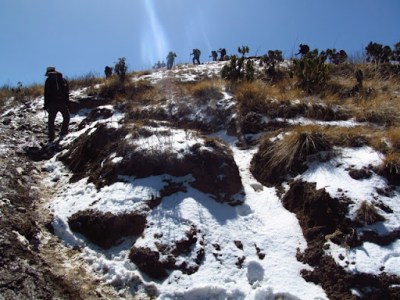
Mud and snow, all mix up as if we were walking on Oreo land 

It had proven to be true that once we had been recharged with food and water, our body performed better. We managed to reach Tadapani by 5pm. The team must have raced against time; our main motivation was not to walk into the cold and the darkness. This could only be possible when the team had good endurance fitness. This brought us back to how we had conditioned our body prior to the trip to prepare for this out-of-the-blue trail thrashing day. We did well; we had sufficient time to enjoy the beautiful mountain range of Machapuchare, Annapurna South, and Hunchuli from our lodge. That evening, I never felt so pleased ever, there was a sense of a little achievement for me, though tired.
A peep into the mountain range @ Tadapani

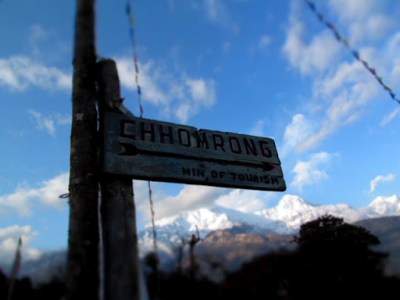
Leaving Chomrong, a steep ascent awaiting
us on our return journey

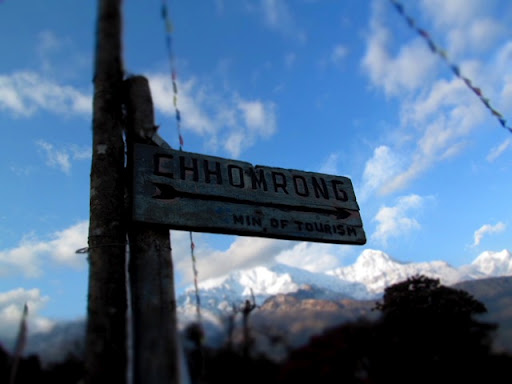
We already had 4 other members experiencing mild headaches (probably due to heat exhaustion and fatigue) and one losing appetite at Ghorephani. I have been keeping the team’s goal in mind, which was to have everyone arrived at ABC. By now, I was already sure that all had arrived at Poon Hill, but getting to ABC together remains questionable. The trek ahead would get tougher; we would have to trek longer hours each day with steep stairs to manage, and would be staying at higher elevation after Chomrong – our next destination after Tadapani. Chomrong was like a mini Namche Bazaar (Khumbu Region), it was bustled with trekkers and climbers, school children, and tea lodges. Like Namche, the village requires some steep ascend when approached from the last village.  After leaving Chomrong, we made a descent and climbed up to the hill trekking along the Modi Khola (Modi River). We were making a gradual ascent of 300m towards Dovan (2500m) with what our Sirda, MB, would described the trail as, “Nepali Flat” – a little bit down and a little bit up.

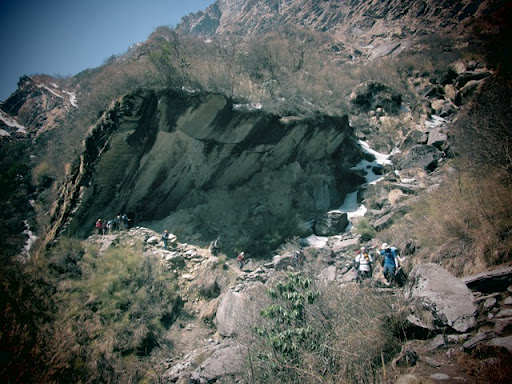
After Dovan, our immediate destination would be the Machapuchare Base Camp (MBC) at 3700m.  From Dovan, the trail was mainly a traverse, passing the iconic Hinko’s Cave before arriving at Deurali (3230m) for lunch. With mainly a traverse before lunch, the steep ascent happened after lunch with deep snow trail to battle with.
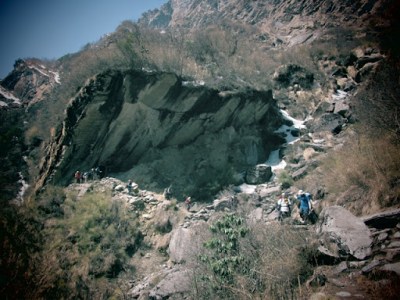
Traversing the Hinko’s Cave

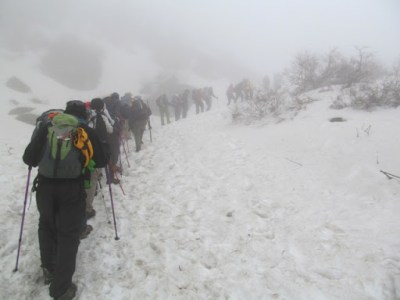
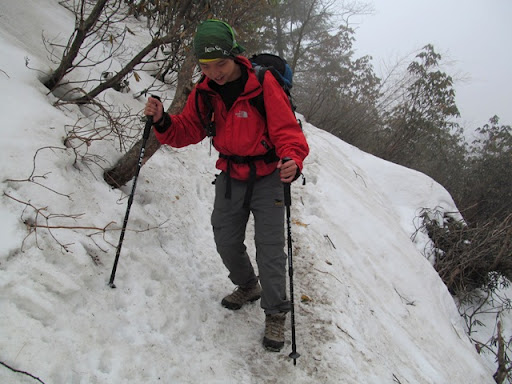
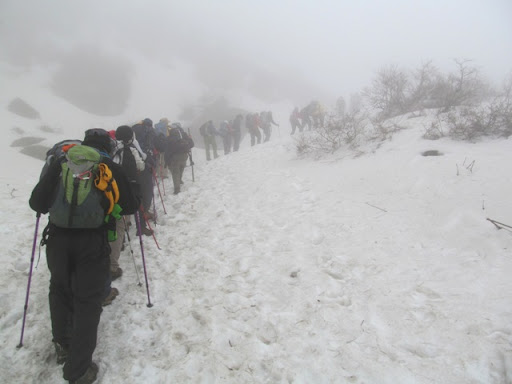
Walking on snow trail is not exactly that difficult, but walking it for the first time and on a slope with a drop on one side can be very intimidating. That was exactly what happened to the team when heading towards MBC. The trail was not only slippery to walk on, the visibility had drop to less than 10m – not to mention that the team slowed down tremendously once again. When we arrived at MBC after 5pm, the sun set shortly. The cold set in, but the evening skyline that filled with stars was rewarding.
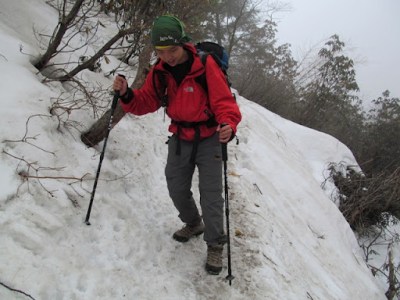
Jian Wei negotiating on the snow slope carefully, trekking poles became indispensable 

Walking on near whiteout condition

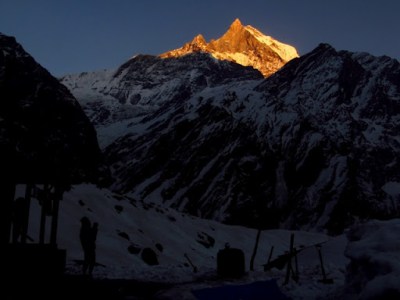
The sun set casting a glow on Machapuchare (Mt Fish Tail) 
Machapuchare Base Camp (MBC)


Yun Ting, a little tough cookie

My memories of the MBC had been that it was a huge snow field with little facilities, except for a big toilet container which I would need to climb up to. It was cold and unfriendly. Now, the MBC has 3-4 lodges, and even ABC has lodges that served meals. Good development indeed, at least it would not seem like a barren land.

We spent the cold night at MBC with temperature dipping to -5 degree celsius. After a check with the team, one of the girls, Yun Ting, had some terrible headache; she was feeling nausea, losing her appetite. It was definitely a symptom of high altitude sickness.  We shared the same room, so it was convenient for me to monitor her condition. That night, I didn’t sleep much; I kept myself alert the whole time in case her condition got worst. In her midst of fighting to stay calm with her heavy head, she shared with me that she had suffered the same when she was in China, and that she felt very miserable back then.  The next morning at 4am, I woke her up to check on her condition. I wondered if she even gets to sleep at all. Anyway, I would not want to decide for her if she should push the last bit, or to stay at the lodge while we moved on to ABC. I had wanted her to own the experience; she had to make her own decision.  So I posted the question to her in my usual stern manner. I must say, she was one hell of a tough cookie. Or perhaps, my words were like a command to her, or somewhat very aggressive. Without much hesitation, she started to change into her trekking attire. Soon, she was ready to start her morning trek to ABC. I wasn’t sure if her decision was good, but I knew that she was better that way than to continue to sleep and rot her time away feeling miserable without the team.
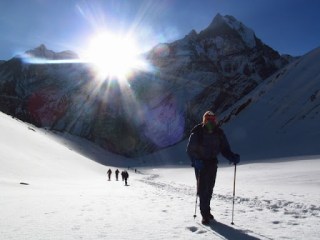
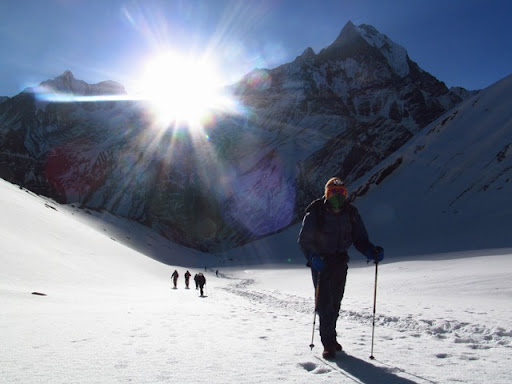
The sun finally emerged behind us

We left MBC at 5.15am, and soon, we found ourselves plodding on the snow field. We had random stops as we breathe through the cold thin air. Our feet were dragging for sure, our breathing was heavy, but our goal was clear. We were so close to our destination, yet so far.

My last visit was in the autumn of 1998; I did not experience so much snow back then. Chatting with MB, our Sirda, he said that the last winter was a bad one in Nepal.  There were pouring snow all over the Annapurna Region which caused the base camp and its trail to be piled up with deep snow. It was rather unusual.

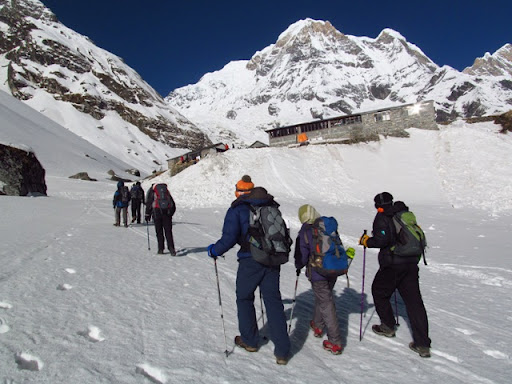
The team finally saw the lodges that anchored the Annapurna Base Camp 

As we moved higher, the team started to split into smaller groups; we arrived at ABC sporadically. There were no fanfare, but I could see the satisfaction in everyone’s face. As for Yun Ting, she was already in tears when I met up with her. I supposed it was her tears of joy, hardship and for the road to resilience.    

Need not to say, the snow field behind the lodges soon became our battlefield for snowball fights.
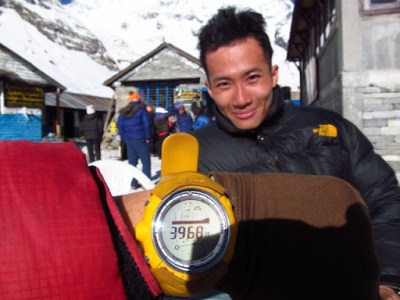
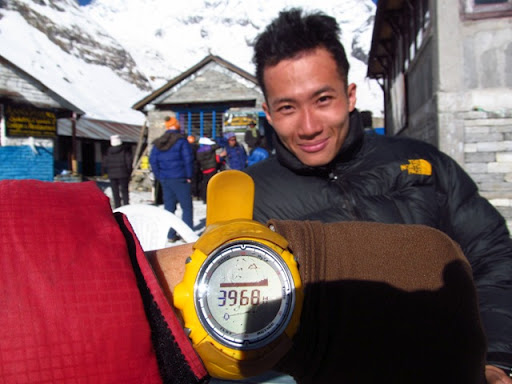
My alti-meter (Polar )watch, last calibrated on Ama Dablam in Nov 2011, and
Clement,  the Leader of the SP Team Nepal
(who enjoys giving out flatus on the go ..hiak)

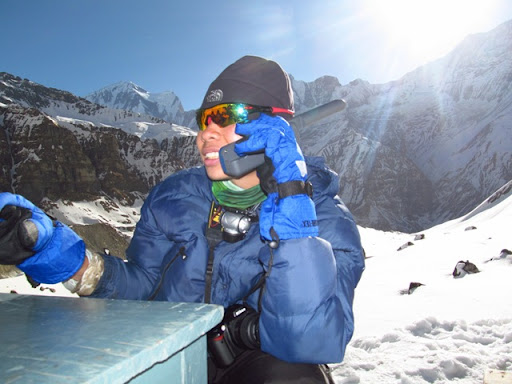
Pang Chuen making a call home using the satellite phone provided by SP 

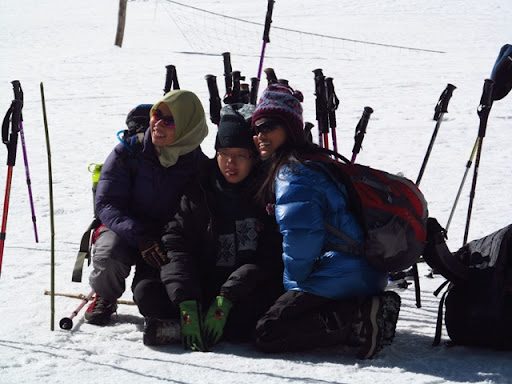
Yun Ting, miserably surrounded by trekking poles, with her supportive
team mates, Hafiizah (L) and Sarina (R)
For Yun Ting ~ it takes courage to move beyond your comfort zone ~
Thank you, Yun Ting.
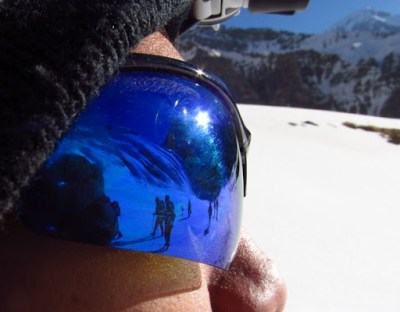
Reflection of lifes on Alvin’s shade

Azri jumping for joy – no more headaches 
We have arrived at ABC, that was only half the journey;
the safe descent complete the program 

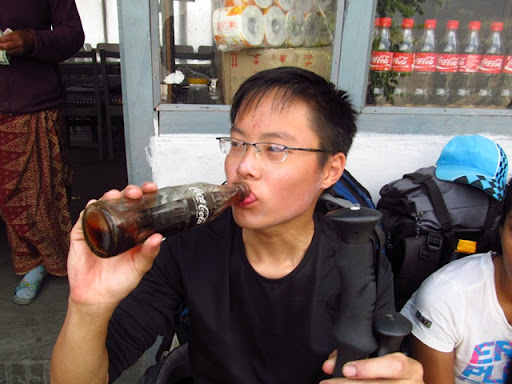
Benjamin enjoying his coke of the day. One of the most popular cold drinks
that we all hit on with on our return journey.
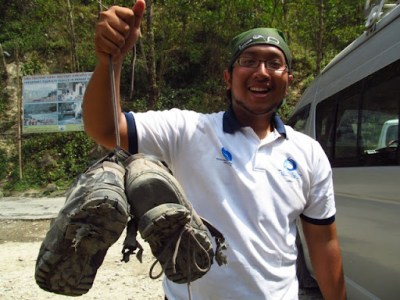
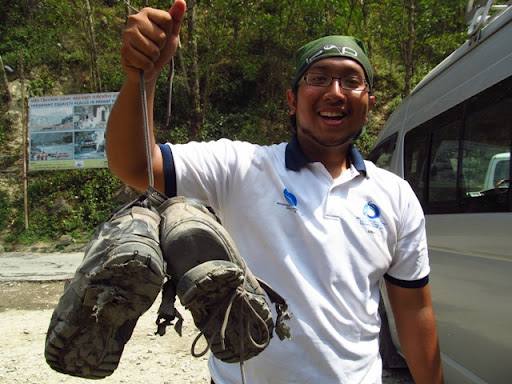
Adil, I said you would last, but I was not sure about your shoes.
Bingo!

Dennis (L) and Christopher (R), thank you for your unwavering support
during the trek.

For me, I have made trekking and climbing as part of my life. Each journey marks a unique experience; it didn’t matter where I was going, what matters most was the people that came along with me. I have the privilege to be part of the SP Team Nepal expedition, I treasure every moment. Each of them gave me comfort and strength, and a chance to build on new friendship that would last a lifetime.

Last but not least, my greatest joy was to have seen the students falling on snow, sending their butt sledging stunts on the snow trail. From having the fear of falling to mastering the art of balancing on snow, I witnessed them trek with confidence day by day.  Life is not about how fast you run, how high you climb or how hard you fall; it is how hard you bounce that makes your life purposeful.

Namaste.


The Singapore Polytechnic Annapurna Base Camp Trek was organised and managed by Adventure Quests. I would like to thank Ms. Vinnie Tan for her support in providing meaningful workshops to prepare the students for the trek; thank you Jerry for all the pre-trip administration work that contributed to the smooth operation of the trek; thank you AM (Amin) for coordinating the visa application that made things easy after, and the last minute training replacement for me.
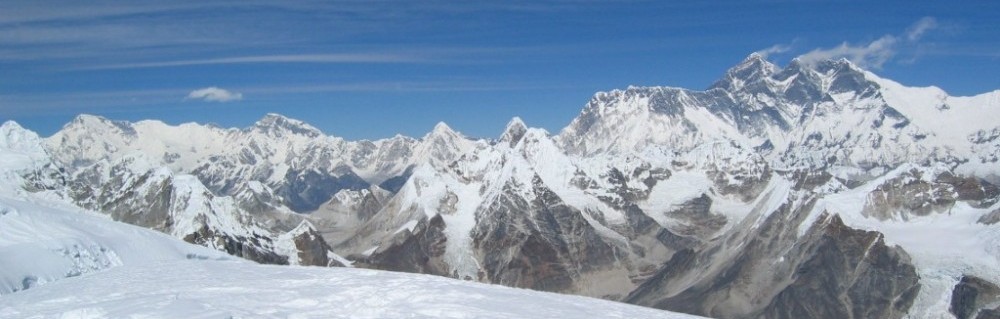
ABC with SP

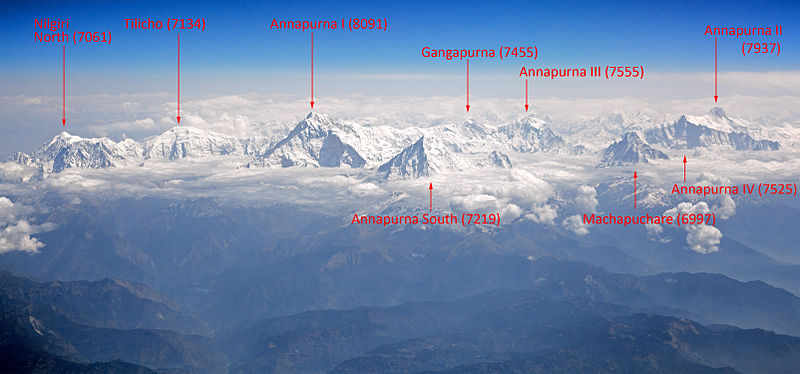
Aerial view of Annapurna Range

Source of photo: http://en.wikipedia.org/wiki/File:Annapurna_Massif_Aerial_View.jpg

The trekking and climbing season in Nepal will start soon. And YES! I am going back to Nepal, the most beloved land of mountains by many – trekkers, mountaineers, backpackers.

This time, I will return to Annapurna region. My last visit to Annapurna region had been in 1998, which I led a group to the base camp. To get to the Annapurna region, we have to start from Pokhara – the second largest city in Nepal. Pokhara is situated about 190km west of Kathmandu – the capital of Nepal. I am sure things have changed much in Pokhara since my last visit had been more than 10yrs ago. One of the biggest draw for me had been to visit the International  Mountain Museum – a cultural offering in Pokhara, a museum dedicated to the mountains and the mountaineers.  
I will be traveling with the students from the Singapore Polytechnic (SP). The trek is organised by Adventure Quests, the appointed travel agency by SP.  My adrenaline ran high when I met them at the Bukit Timah Hill for some trail training. What excite me was not only about their enthusiasm, but their discipline. Self leadership is a discipline I see in them. I am so looking forward to trek with them, to mingle with them, and to have many fun encounters together. The truth is, they made me feel young again! hohoho!
Team at the summit of Bukit Timah Hill (photo by Gregory Low, SP) 

I have been to Annapurna twice, once in Spring, and another in Autumn. My personal view is that Autumn offers a more colorful landscape than in Spring. However, we are visiting Nepal, a place where any season will ink good memories to one’s traveling experience. 

Annapurna Base Camp (ABC) trek, also known as the Annapurna Sanctuary, is a perfect trek for a beginner who wants to venture into high altitude trekking. The trail is well paved, and offers sufficient challenges with all the up and down hill climbs on rock path. In the days of trekking, the magnificent views of the Annapurna range melt one’s tiring body and heart away, yet rejuvenate one’s mind and soul. An iconic view of Machapuchare at 6997m (aka Fish Tail peak because the peak looks like a fish tail) accompanies trekkers for almost the entire journey. The highest peak around the region is Annapurna I at 8091m, the 10th highest peak in the world. 
To make a trip to ABC, trekkers do not need to invest much, here is a quick look at the gear requirement:
Attire
  1. Comfortable quick dry shirt
  2. Thermal wear (long johns)
  3. Light weight fleece shirt
  4. Down jacket (for the night) – goose down, duck down, polyester fill
  5. Rain jacket (outer shell)
  6. Trek pants (water repellent)
  7. Thermal pants
  8. Mid to high cut trekking shoes (water proof)
Head Wear
  1. Beanie
  2. Sun hat
  3. Sunglasses
Equipment
  1. Sturdy backpack (day pack, if you have a porter)
  2. A pair of trekking poles
  3. Head lights
  4. Water bottle (Nalgene is highly recommended)
The above are the most essential items. There can be more added to it to enhance your trekking experience. If you are keen to participate in such a trek, contact Adventure Quests for more details and assistance.

Instructor Training Course

Come this weekend, I will conduct my first course for the year. Officially working away from home for the first time in 2012, not counting meetings that I have to attend. This is the advantage of working from home 😀

The course that kick start my 2012 is the Sport Climbing Instructor Training Course. I like to conduct such courses, because it allows me to learn new ideas from the course participants. Most participants will have wide range of climbing experience, from local climbs to climbing in Thailand, Malaysia and China. Everyone will have some new things to share. I am excited and so looking forward to it.
 

Climber playing stunts while being a “casualty” for his climbing buddy!